Supervisor Emails and My Heart Rate

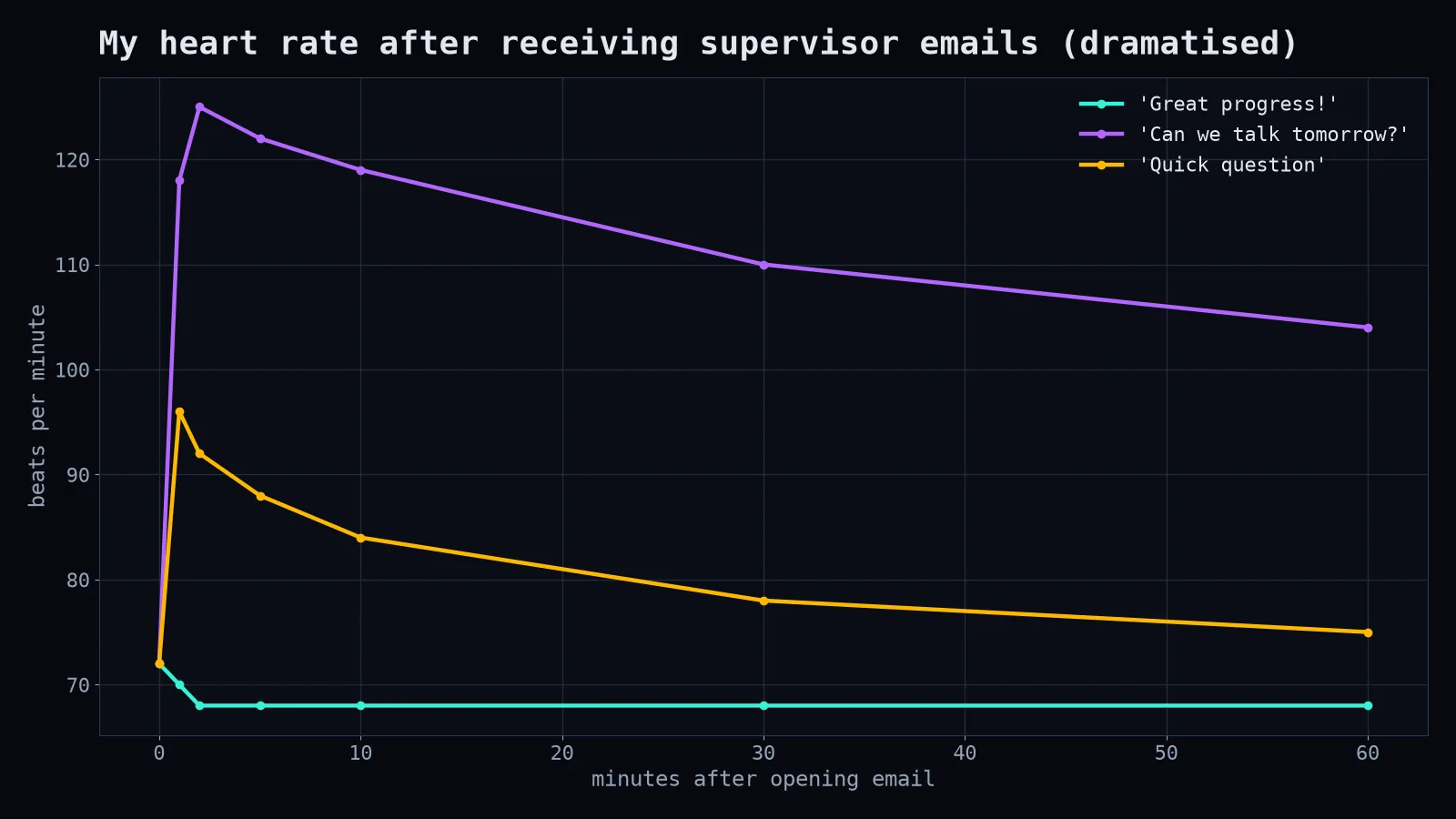
There's a particular kind of email every PhD student fears. It arrives at 11:47 PM. The subject line is empty. The body reads, in full: "Can we talk tomorrow?"
Your brain immediately writes a disaster film. The data was wrong. Funding is cut. A reviewer found an error. You've been studying the wrong thing for two years.
The next morning, the meeting is about whether you'd like to present at a seminar.
Why it feels so intense
A supervisor has real influence over your degree, funding, publications and future recommendations. The power difference is real, and ambiguity fills with anxiety. Add impostor syndrome and sleep deprivation, and "quick question" becomes a cardiac event.
Build a predictable rhythm
The best antidote to anxiety is predictability:
- Regular meetings (weekly or every two weeks), even short ones, so problems are discussed early instead of exploding.
- An agenda you send before each meeting: what you did, what's blocking you, what decisions you need.
- Notes after each meeting: a short email summarising what was agreed. This prevents "I thought you said..." moments months later.
Subject: Notes from today's meeting (14 Oct)

- Agreed: run the ablation on the coastal dataset before the workshop deadline.
- I'll share preliminary results by Friday.
- Open question: whether to include the 2019 images (you'll check with the data team).
Communicate early, especially bad news
Experiments fail. Deadlines slip. Supervisors generally handle "this didn't work, here's what I'm trying next" much better than silence followed by a missed deadline. Bad news delivered early is a planning problem. Bad news delivered late is a trust problem.
Ask how they like to communicate
Some supervisors prefer email, some prefer chat, some want everything in meetings. Some reply within an hour, some within a week. Asking directly in the first months saves years of guessing.
Ask for clarity when you need it
It's fine to reply: "Of course. Is this about anything specific I should prepare for?" Most supervisors simply didn't realise their short email sounded ominous. They're busy, writing on a phone between meetings.
When the relationship isn't working
Sometimes it's more than miscommunication: no feedback for months, unreasonable demands, disrespect or conflicts about authorship. Most universities have graduate program directors, ombudspersons and student support services. Use them. Your wellbeing and your degree matter more than avoiding an awkward conversation.
A message to supervisors
If you're a supervisor reading this: please add one line of context. "Can we talk tomorrow? Nothing bad, just want to discuss the conference." Your student will sleep, and their work will be better for it.
The happy ending
Good supervisor relationships are one of the best parts of a PhD: someone experienced who believes in your work and helps you grow into an independent researcher. Most "can we talk?" emails lead somewhere good. Still, I've told every student I've mentored the same thing: if I ever send an email like that, the news is good. Probably.