PhD Life: The Reviewer #2 Saga
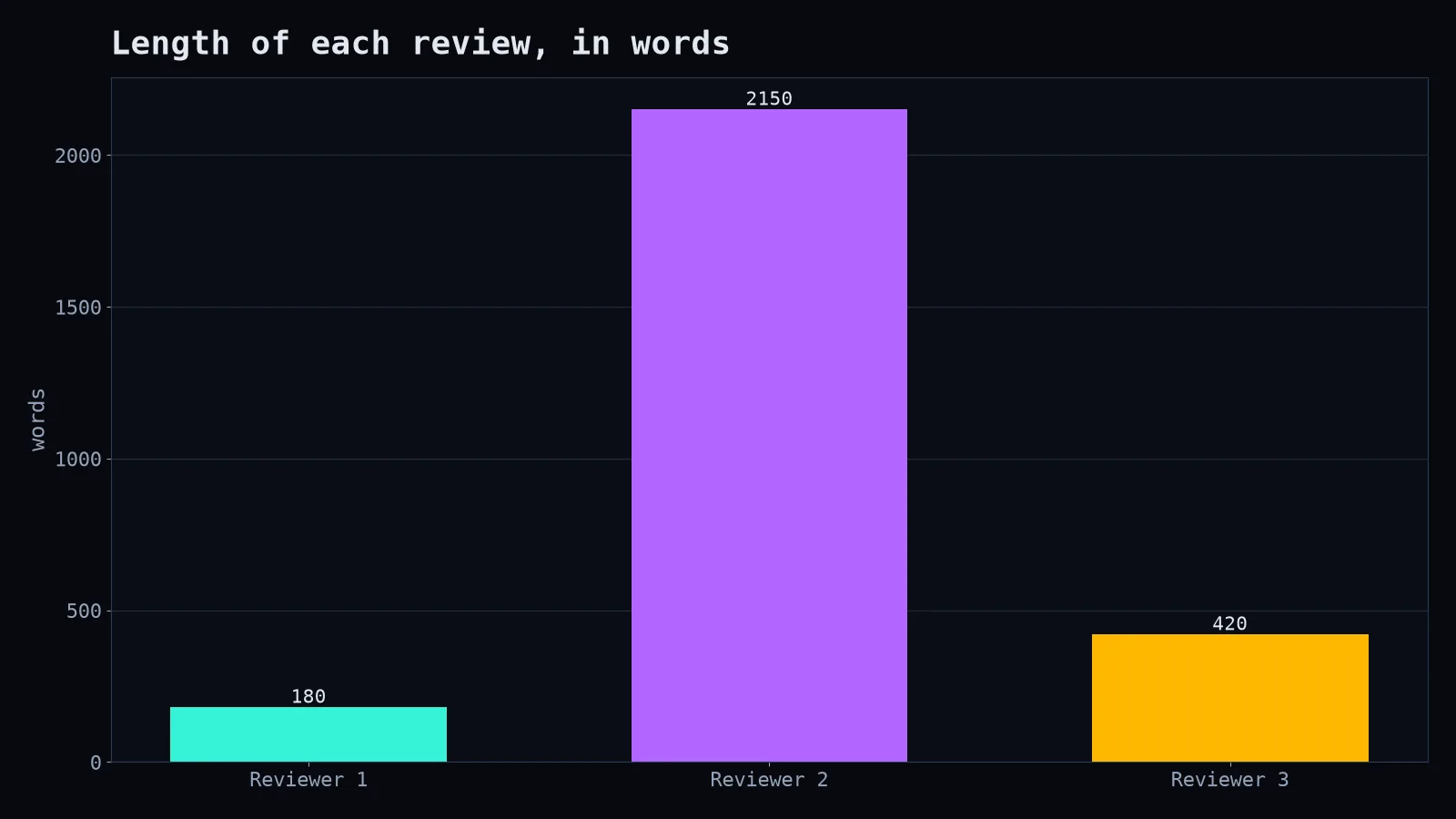
Every researcher knows Reviewer 2. Not a specific person, but a spirit that possesses one reviewer on almost every paper. Reviewer 1 says "a solid contribution, minor revisions." Reviewer 3 suggests two extra references. Reviewer 2 writes several pages explaining that your method is flawed, your dataset is unrepresentative, your results are unsurprising and, while we're at it, have you considered a completely different research question?
The stages
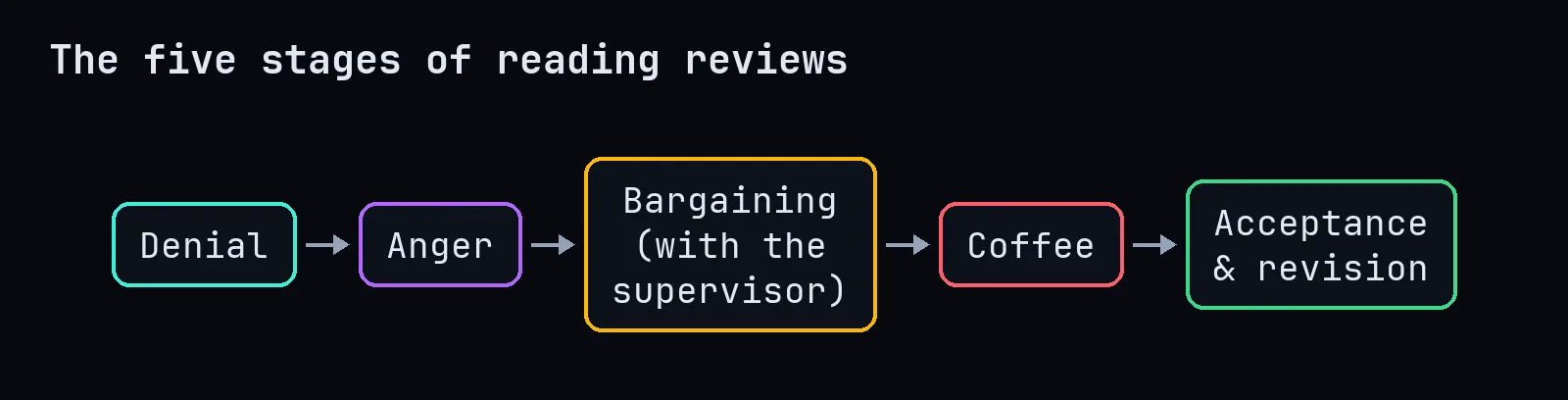
My advice for the first reading: read the reviews once, close the laptop and do something else. Don't respond on the same day. Your first draft of a reply, written in stage 2, should never be sent to anyone, especially not an editor.
Reviewer 2 is often (partly) right
After the anger fades, re-read the review carefully. Usually, buried under the harsh tone, there are real points: a missing baseline, an unclear explanation, an assumption you didn't justify. Reviewer 2 is often a careful reader who's bad at being kind. The paper usually gets better because of them. (Not always. Sometimes Reviewer 2 just wanted you to cite their 2014 paper.)
How to respond
Make a table. Copy every comment into a document, numbered. Reply to each one individually: what you changed, where (page and line), and why.
Be polite, always. "We thank the reviewer for this insightful comment" is the academic equivalent of a deep breath. Even when the comment isn't insightful.
Do what you can. If they ask for an extra experiment that's feasible, do it. It's often the fastest route to acceptance.
Disagree with evidence, not emotion. If a request is wrong or out of scope, explain why respectfully, with references or data. Editors respect reasoned disagreement.
We appreciate this suggestion. However, applying method X would require labelled data for the target region, which is not available. Instead, we added a sensitivity analysis (Section 5.3) showing that our conclusions hold across three alternative thresholds.
Make it easy for the editor. Highlight changes in the manuscript, keep the response organised, and summarise the major changes at the top.
When it's a rejection
It happens to everyone, including famous researchers with long publication lists. Take the useful feedback, improve the paper and submit elsewhere. Many important papers were rejected at least once. A rejection is information about one journal, one editor and three reviewers on one day, not a verdict on your worth as a scientist.
Be a better reviewer yourself
When it's your turn to review, remember how it felt. Be specific, be constructive, separate "must fix" from "nice to have," and assume the authors are tired humans who worked hard. Kindness and rigour aren't opposites.
The final twist
Here's the uncomfortable truth every PhD student eventually discovers: at some point, you'll write a review, reread it and realise you've become Reviewer 2. The best you can do is be the version who's harsh on the methods and gentle on the people.