Photographing Newfoundland Weather: A Survival Guide
Newfoundland weather has a sense of humour. You leave home in sunshine, reach the coast in fog, photograph three icebergs in sideways drizzle and drive home in a snow flurry, in May. Locals say if you don't like the weather, wait five minutes. Photographers say: wait five minutes, then wipe your lens again.
It's also one of the most photogenic places I've ever lived. Dramatic cliffs, colourful houses, lighthouses, whales in summer and icebergs drifting past in spring. The weather is a big part of the drama. You just have to survive it.

Protect yourself first
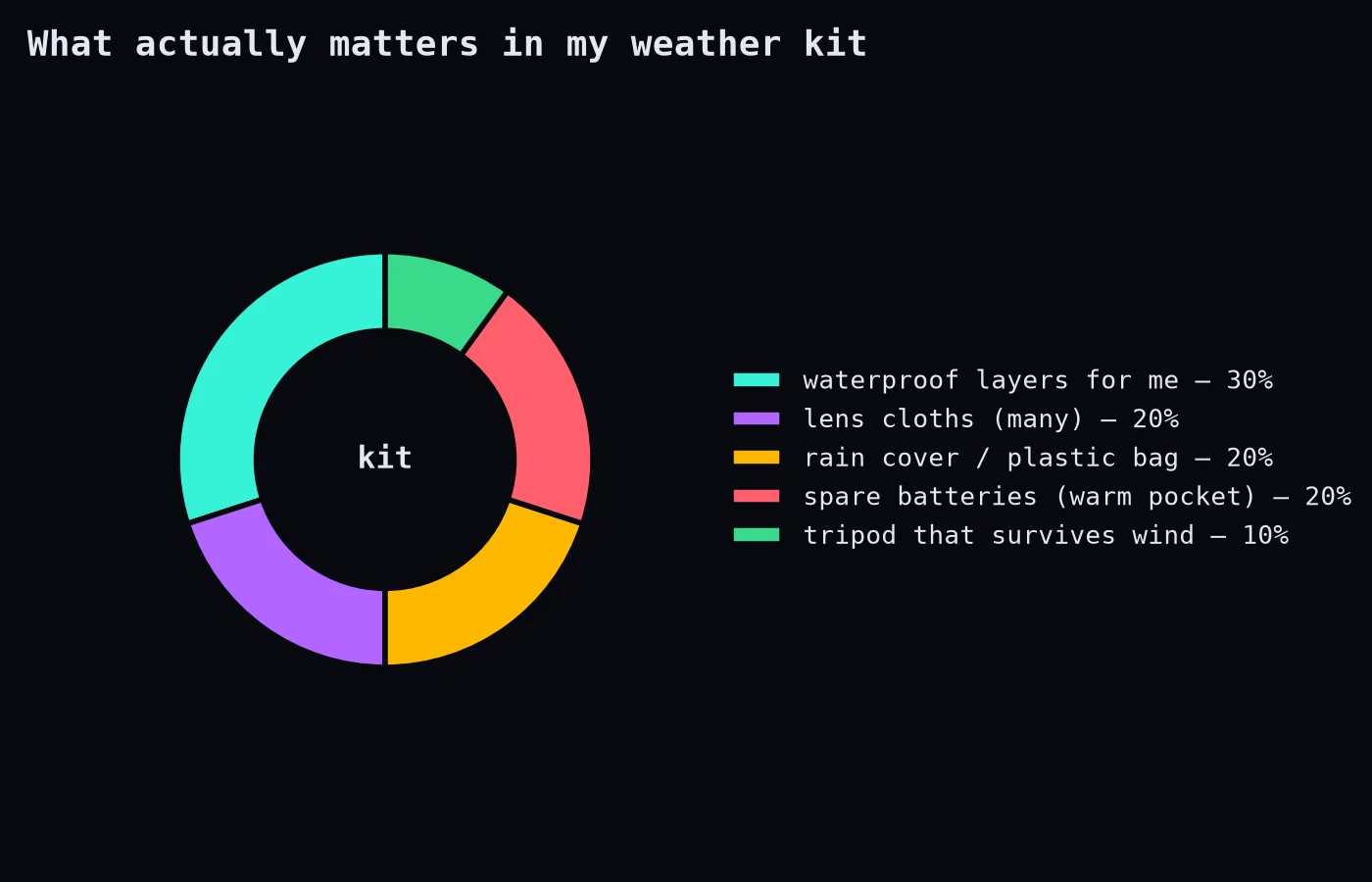
Cold, wet photographers make bad decisions. Dress in layers, bring a waterproof shell, wear proper boots for slippery coastal rocks, and stay well back from cliff edges, especially in wind. No photo is worth a fall. Coastal trails here are beautiful and, in bad weather, unforgiving.
Protect your camera
- A rain cover (or a cheap plastic bag with a hole for the lens) handles most showers.
- Lens cloths, plural. Salt spray and drizzle will coat the front element constantly. A lens hood helps keep rain off.
- Batteries die fast in the cold. Keep spares in an inside pocket, close to your body, and swap them in.
- Avoid condensation. When you come in from the cold, leave the camera in a closed bag for an hour so it warms slowly. Opening it straight into a warm kitchen fogs everything, sometimes inside the lens.
Wind
Wind is constant on the coast. It shakes tripods and blows rain onto your lens.
- Hang your bag from the tripod hook for extra weight.
- Keep the tripod low and the legs wide.
- Use a faster shutter speed when hand-holding.
- Shoot from the sheltered side of rocks and buildings.
Embrace the weather instead of waiting it out
- Fog removes clutter. A lighthouse disappearing into mist is moodier than the same lighthouse on a blue-sky postcard. Expose a little brighter so the fog looks white, not grey.
- Storms give dramatic skies and waves. A fast shutter freezes spray; a slower one turns it into texture.
- Overcast light is soft and even, perfect for colourful houses and close details.
- Breaks in the clouds create spotlights on the landscape. Be ready; they last seconds.
Respect the wildlife and the ice
Use a long lens for whales, seabirds and seals, and keep your distance. Icebergs are spectacular but can roll or break without warning, so admire them from shore or from tours that know what they're doing.
The reward
The best photos I've taken here weren't on perfect days. They were in the ten minutes when fog lifted from a bay, or when sunlight broke through a storm and lit the cliffs gold. You only get those moments by being out there when the forecast says stay home. Bring a towel. And a thermos.