Golden Hour Is Overrated (Said No One Ever)
Photographers talk about golden hour the way coffee people talk about single-origin beans: with reverence and slightly too much detail. Annoyingly, they're right. Light is the most important ingredient in a photograph, and for about an hour after sunrise and before sunset, the light is gorgeous.

Why it looks so good
When the sun is low:
- The light is warm. Sunlight travels through more atmosphere, which scatters blue light away and leaves orange and gold.
- The light is soft. It's less intense and more diffused, so faces don't get harsh shadows under the eyes and nose.
- Shadows are long. They add depth and texture to landscapes, buildings and even sand.
- It comes from the side. Side light reveals shape; overhead light flattens everything.
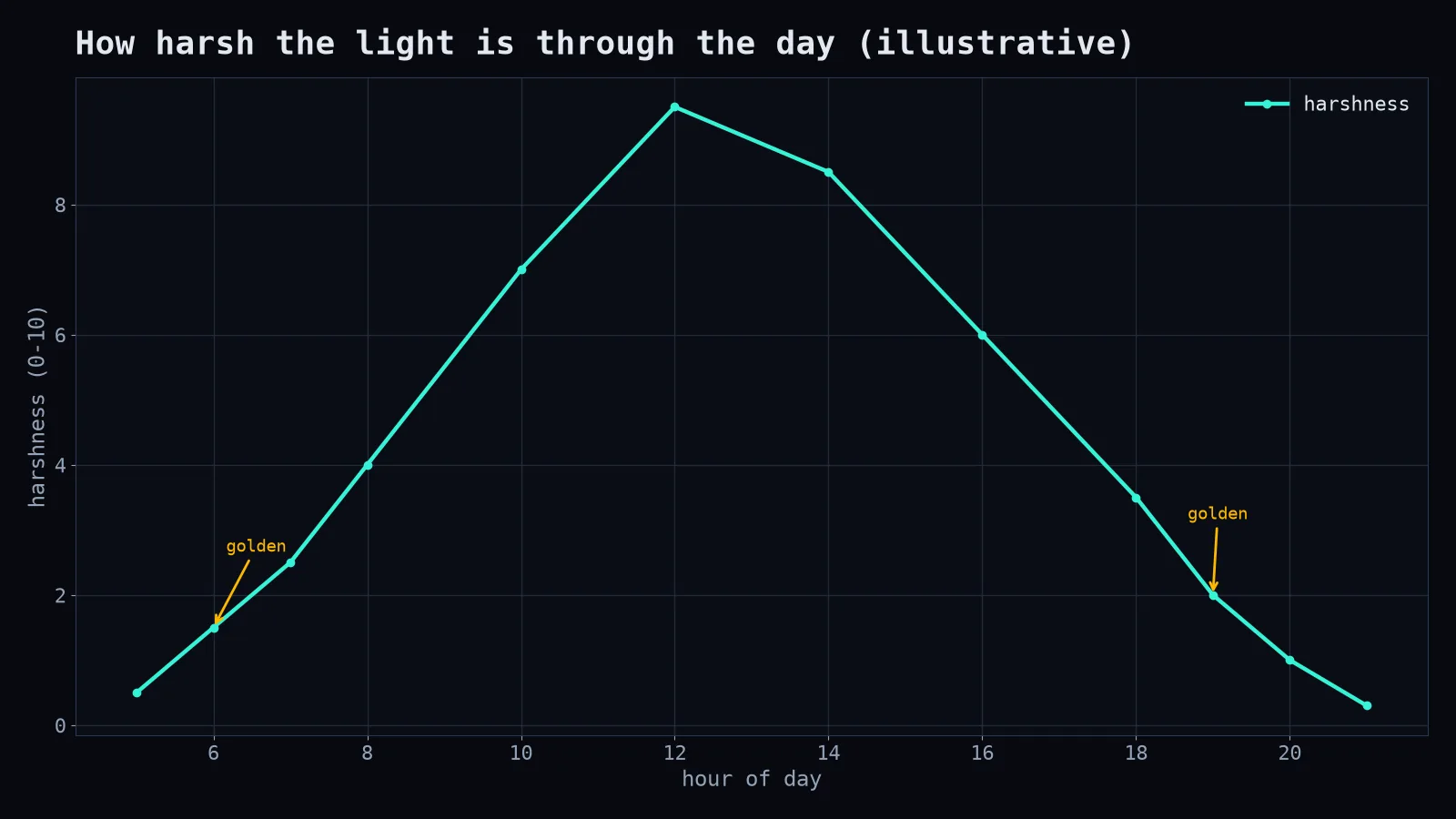
Midday sun, by contrast, comes from straight above. It gives people "raccoon eyes," blows out skies and makes everything look like a crime scene photo.
Plan for it
Golden hour isn't exactly an hour, and its timing changes with the seasons and your latitude. Near the equator it's short; far north, in summer, it can stretch for ages. Use a weather app or a sun-position app to check sunset time, then:
- Arrive 30–45 minutes early. Scouting in good light is half the job.
- Know where the sun will set relative to your subject.
- Have your settings ready: golden light fades fast.
How to use it
- Backlight your subject (sun behind them) for a glowing rim around hair and edges. Expose for the face, and let the background go bright.
- Side-light landscapes to bring out texture in hills, waves and buildings.
- Shoot into the sun carefully for flare and silhouettes. Never stare through an optical viewfinder at the sun.
Don't pack up at sunset
Right after the sun disappears comes blue hour: soft, cool, even light, with city lights switching on. It's fantastic for cityscapes because the sky still has colour while windows and street lights glow. Bring a tripod or brace your phone; shutter speeds get slow.
Missed golden hour?
Good photos happen all day if you work with the light instead of against it:
- Overcast days are a giant softbox: perfect for portraits and flowers.
- Open shade (the shadow of a building on a sunny day) gives soft, flattering light on faces.
- Midday is good for strong graphic shadows, black-and-white, and bright, saturated street scenes.
The real lesson
Golden hour teaches you to see light: its direction, colour and softness. Once you notice light, you'll find small golden hours everywhere: a window in the late afternoon, a reflection off a white wall, a street lamp at dusk. Chasing beautiful light isn't a photography trick. It's a way of paying attention.