Deep Work in an Age of Slack Notifications
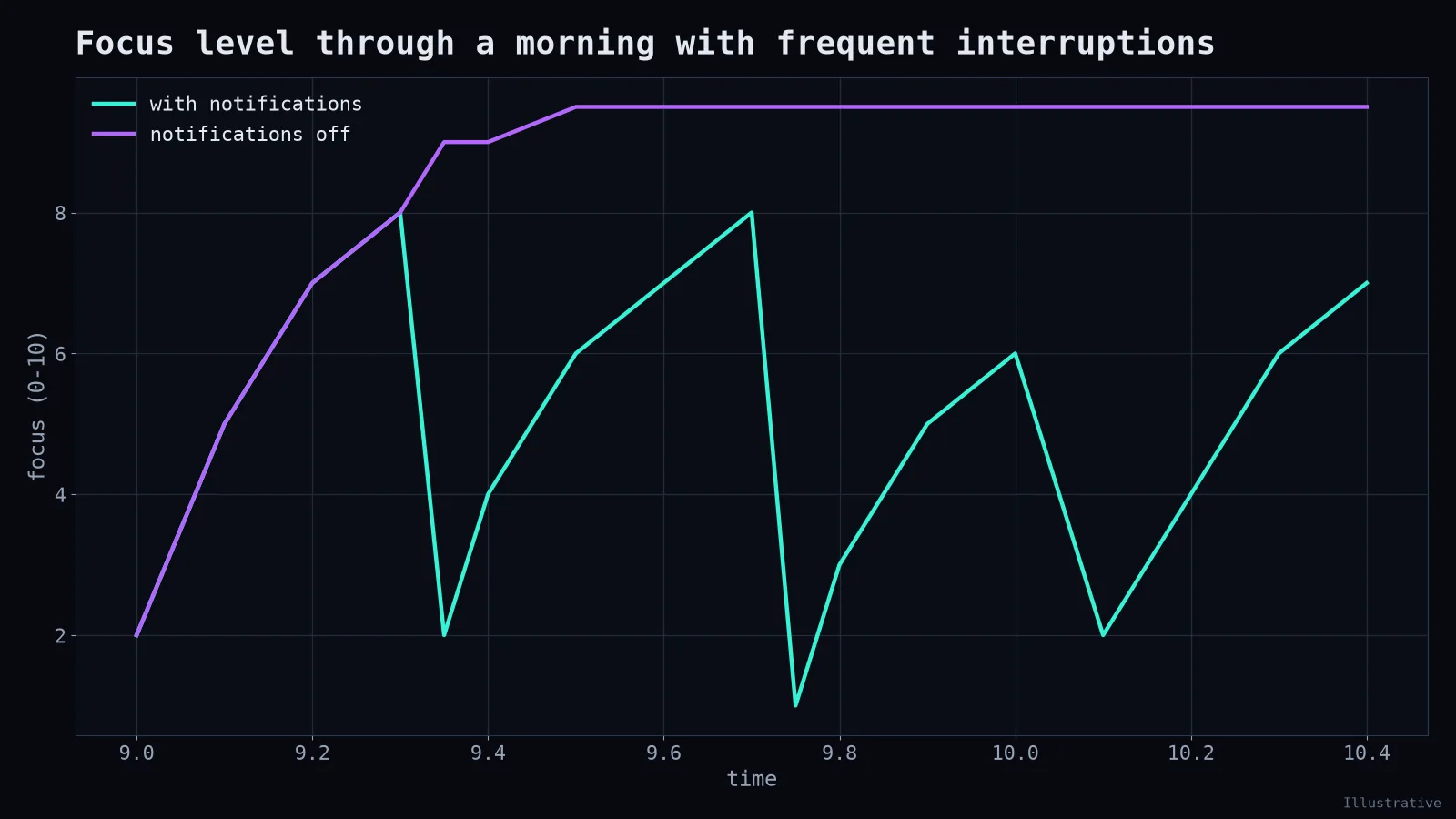
I once tracked how often my focus was interrupted during a morning of "deep work." Slack messages, email badges, calendar pop-ups, a phone buzzing with a news alert, a colleague's "got a sec?" The answer was embarrassing: I rarely had more than 15 uninterrupted minutes.
The interruptions themselves were short. The damage wasn't.
Why interruptions cost so much
Complex work, like debugging, writing, designing or analysing data, requires holding many pieces in your head at once. An interruption doesn't just pause that; it scatters it. Getting back to the same depth of focus can take a long time, and part of your attention often stays stuck on the interruption (researchers call this "attention residue").
So a 30-second message can cost much more than 30 seconds.
Protect focus blocks
- Schedule them. Put two-hour "focus" blocks on your calendar, like meetings. If they're not on the calendar, they'll be eaten by meetings.
- Do the hardest work first, before the day's messages accumulate.
- Batch communication. Check Slack and email at set times (say, every hour or two), instead of continuously.
Tame notifications
- Turn off all non-essential notifications on your phone and computer. Badges included.
- Use "Do not disturb" or focus modes during focus blocks, with exceptions for genuinely urgent people.
- Set your status: "Focusing until 11:30, will reply after. Call if urgent." Clear expectations reduce guilt and follow-up pings.
- Leave channels you don't need. Mute the ones you only need occasionally.
Make it work for the team
Deep work fails when it's an individual rebellion against team habits. Discuss norms together:
- What counts as urgent, and how should urgent things be communicated? (A phone call, not a Slack message titled "quick q.")
- Expected response times for chat vs email.
- Meeting-free mornings or a meeting-free day each week.
- Writing things down so people don't need to interrupt to ask.
When you're the interrupter
Before sending "hey," ask: can this wait? Can I include the full question in one message so they can answer asynchronously? "Hey, got a minute?" followed by silence is an interruption with suspense.
Write instead:
When you have time today (no rush): which table should I use for monthly active users,
events_dailyoruser_activity? Context: building the retention dashboard.
Protect it at home too
Phones in another room during focus time is the simplest, strongest trick. Many people find it changes their focus dramatically in the first week.
The goal isn't to be unreachable
Teams need communication, and sometimes interruptions are exactly right: production is down, a customer is waiting, a colleague is stuck. The goal is to make interruptions intentional. Protect a few hours a day for the work that needs your full brain, and you'll find you're more helpful, not less, during the hours you're available.