Things Nobody Tells You About Moving Abroad
Moving abroad gets talked about as a checklist: visa, flight, apartment, bank account, phone number, job. Those are hard, but they're also concrete. The things nobody tells you about are the invisible ones.
1. The honeymoon ends
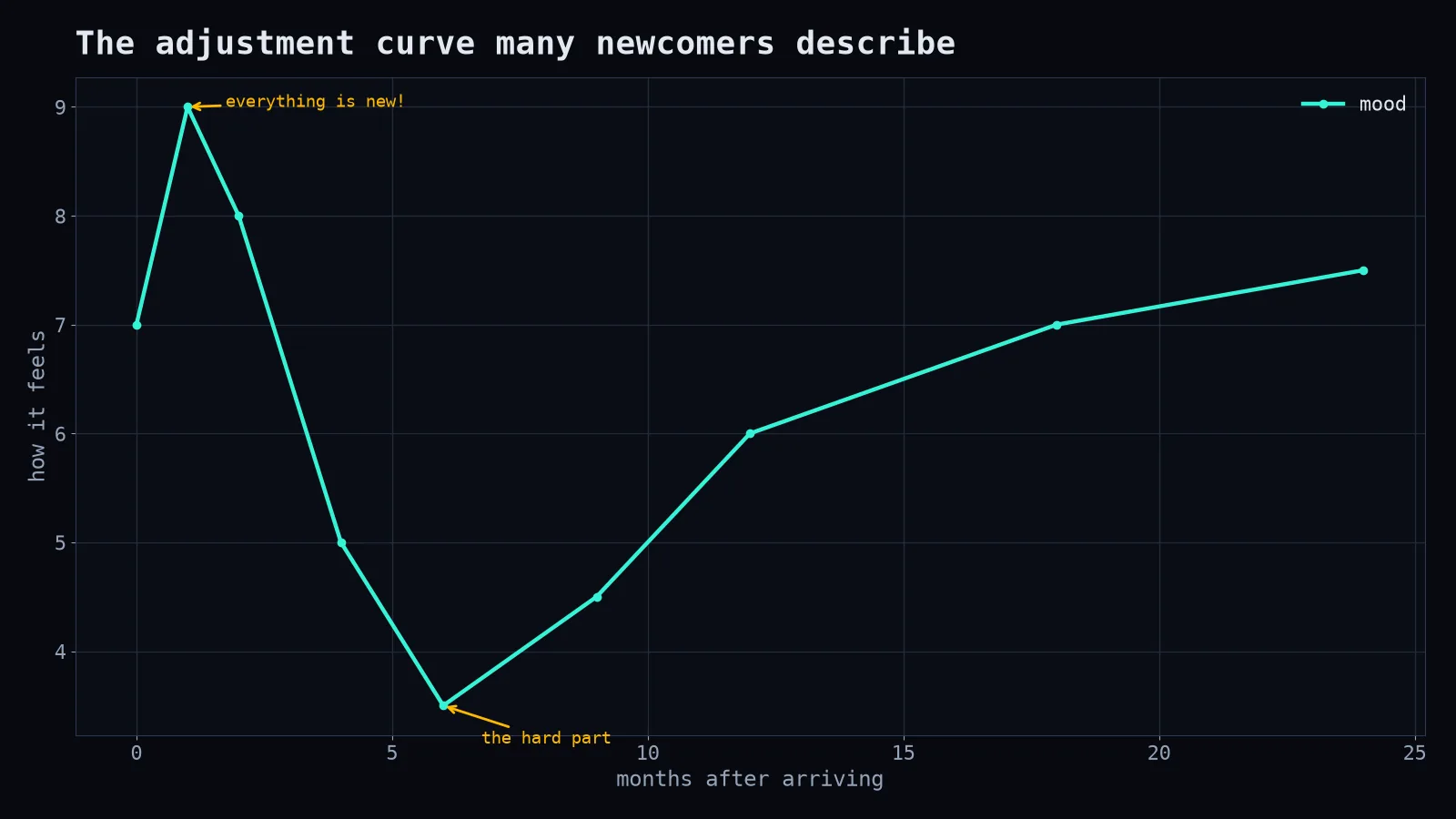
The first weeks are exciting: new food, new streets, new everything. Then the novelty wears off and daily life arrives, without your old support system. Many newcomers hit a low point a few months in. It's common, it's often called culture shock, and it usually passes. Knowing it's normal helps.
2. You start over professionally
Your experience back home may not be valued the same way. Employers ask for "Canadian experience." Credentials may need to be assessed or redone. People with years of experience sometimes take entry-level jobs to get started. It's humbling, and it can be painful. Networking, local certifications, volunteering and bridging programmes can speed it up, but it often takes time.
3. Loneliness hits differently
You can be surrounded by friendly people and still feel alone. Building close friendships as an adult in a new country takes longer than you expect. Community groups, faith communities, sports clubs, hobby meetups and fellow immigrants help. So does saying yes to invitations, even when you're tired.
4. Time zones become part of your life
Calling family means calculating hours. Your morning is their evening. Weddings, festivals and emergencies happen while you're asleep. You watch celebrations through a phone screen. This distance is one of the hardest parts, and it doesn't fully go away.
5. You become a little different in a new language
People who speak a second language often say they feel like a slightly different person in it: more formal, less funny, more careful. Humour is the last thing to translate. Give yourself credit; communicating professionally in another language is a big achievement.
6. Home changes while you're away
When you visit, prices are different, friends have moved on, the city has new buildings and you're treated a bit like a guest. Many immigrants describe feeling "in between": not fully from here, not fully from there anymore.
7. Small victories matter enormously
Your first local friend. Understanding a joke. Getting your first job in your field. Fixing something without asking for help. Celebrate them. They're proof you're building a life, not just surviving.
Practical things that help
- Find your people early, both from your home country and locals.
- Keep a routine: work or study, exercise, sleep, social time.
- Learn the system (taxes, healthcare, credit, tenant rights) from official sources and newcomer organisations, many of which offer free services.
- Keep your culture: cook your food, celebrate your festivals, speak your language with your kids.
- Ask for help. Mental health support, settlement services and community organisations exist for exactly this.
The thing I'd tell someone about to move
It will probably be harder than you expect in some ways and better than you expect in others. You'll lose some things and gain others, including a version of yourself you didn't know existed. Be patient with yourself. Two years in, you'll look back at month six and be amazed at how far you've come.