Canadian Politeness: A Field Study
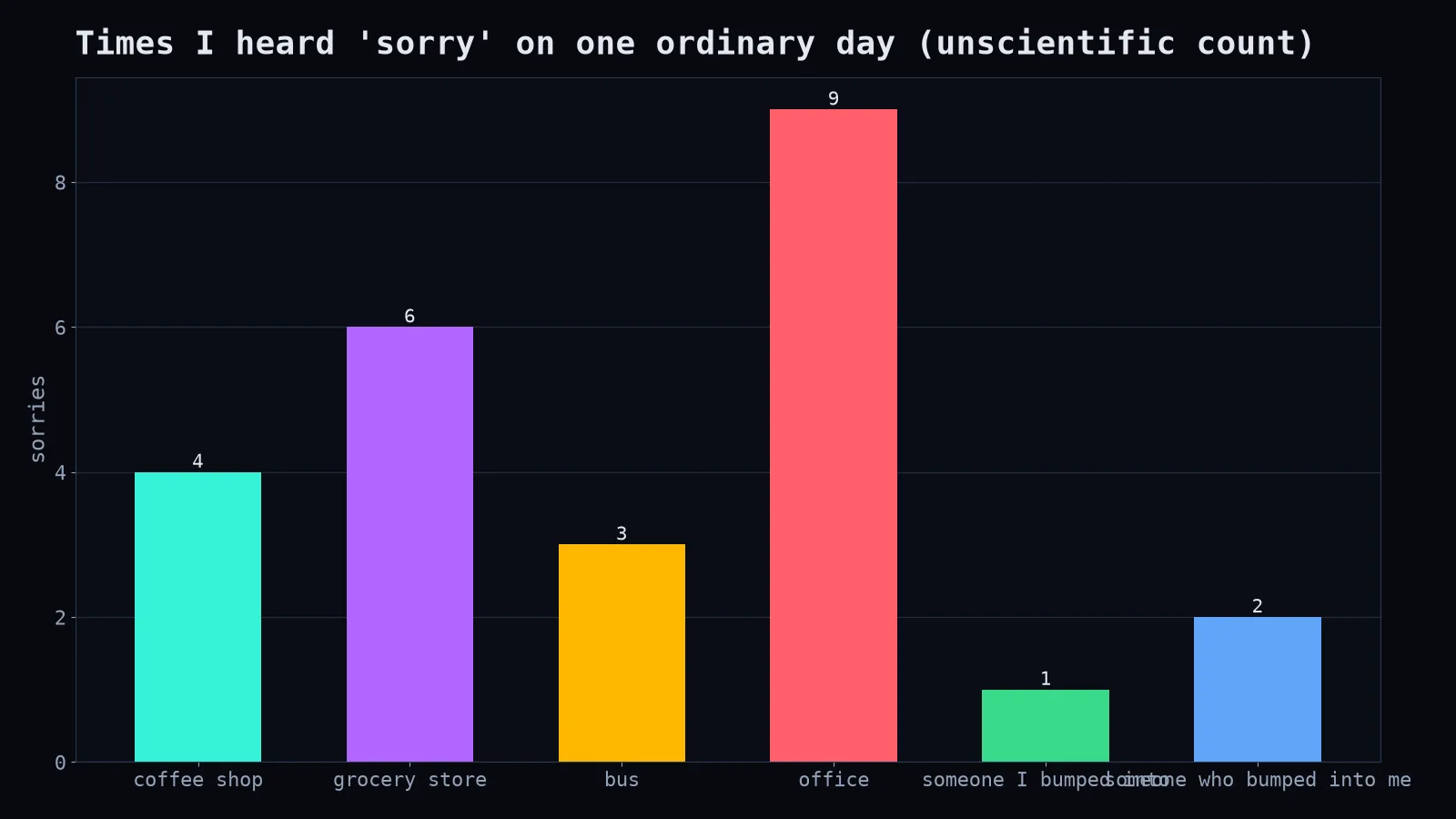
I arrived in Canada knowing the stereotype: Canadians apologise a lot. I assumed it was exaggerated. It is not. On my first week, I accidentally stepped on someone's foot in a grocery store, and they apologised to me.
Observation 1: "Sorry" is not always an apology
In Canada, "sorry" is a multipurpose word:
- "Sorry" = I am in your way.
- "Sorry" = you are in my way.
- "Sorry?" = I didn't hear you.
- "Sorry, but..." = I'm about to disagree firmly.
- "Sorry!" = a general expression of existing in a shared space.
Once you understand this, conversations make much more sense.
Observation 2: Lines are sacred
Canadians line up. For buses, for coffee, for the microwave in the office kitchen. Cutting a line is a serious social offence, usually punished not with confrontation but with a silent, collective disappointment that is somehow worse.
Observation 3: You thank the bus driver
When getting off a bus, many people say "thank you" to the driver, from the back door, across the bus. The first time I heard a chorus of thank-yous, I thought someone important had just driven us. Now I do it too. It's a lovely habit.
Observation 4: Indirect "no"
Canadians, especially at work, often avoid a direct "no." Instead you'll hear:
- "That's an interesting idea." (No.)
- "Let me think about it." (Probably no.)
- "We could explore that down the road." (No, gently.)
- "I'm not sure that's the best approach, but I could be wrong." (You're wrong.)
Coming from cultures where people can be more direct, or differently indirect, this takes calibration. When in doubt, it's fine to ask kindly: "Just to make sure I understand, should I go ahead with this or not?"
Observation 5: Small talk about weather is mandatory
The weather is the national conversation starter. It's a safe topic that nobody can disagree with, mostly because everybody is suffering equally. In Newfoundland, it's practically a sport.
Observation 6: Politeness isn't the same as closeness
People are friendly, helpful and warm in public. Making close friends can take longer, especially as an adult newcomer. Invitations to someone's home may come after months, not days. Joining clubs, sports, volunteering and community groups helps a lot. So does bringing food. Food is universal.
What I've adopted
I say sorry more. I hold doors for people who are uncomfortably far away, then wait awkwardly while they jog to reach it. I thank bus drivers. I've started saying "that's an interesting idea" in meetings, and I'm a little worried about it.
What I've kept
The warmth of Bangladeshi hospitality: inviting people over early, feeding them too much and insisting they take leftovers home. Canadian friends seem confused at first. Then they keep coming back. Turns out politeness and generosity make a very good combination.