Credit Scores: Canada's Mysterious Report Card

Arriving in Canada, I had a degree, work experience and savings. I also had a credit score of nothing. To Canadian lenders, a newcomer without credit history isn't a good customer or a bad customer; they're a blank page, and blank pages make banks nervous.
What a credit score is
A credit score is a number, typically between 300 and 900 in Canada, that estimates how reliably you repay borrowed money. It's calculated by credit bureaus (in Canada, mainly Equifax and TransUnion) using your credit history.
Landlords, phone companies, car dealers and banks may check it. It can affect whether you get a rental, a phone contract or a loan, and the interest rate you're offered.
What goes into it
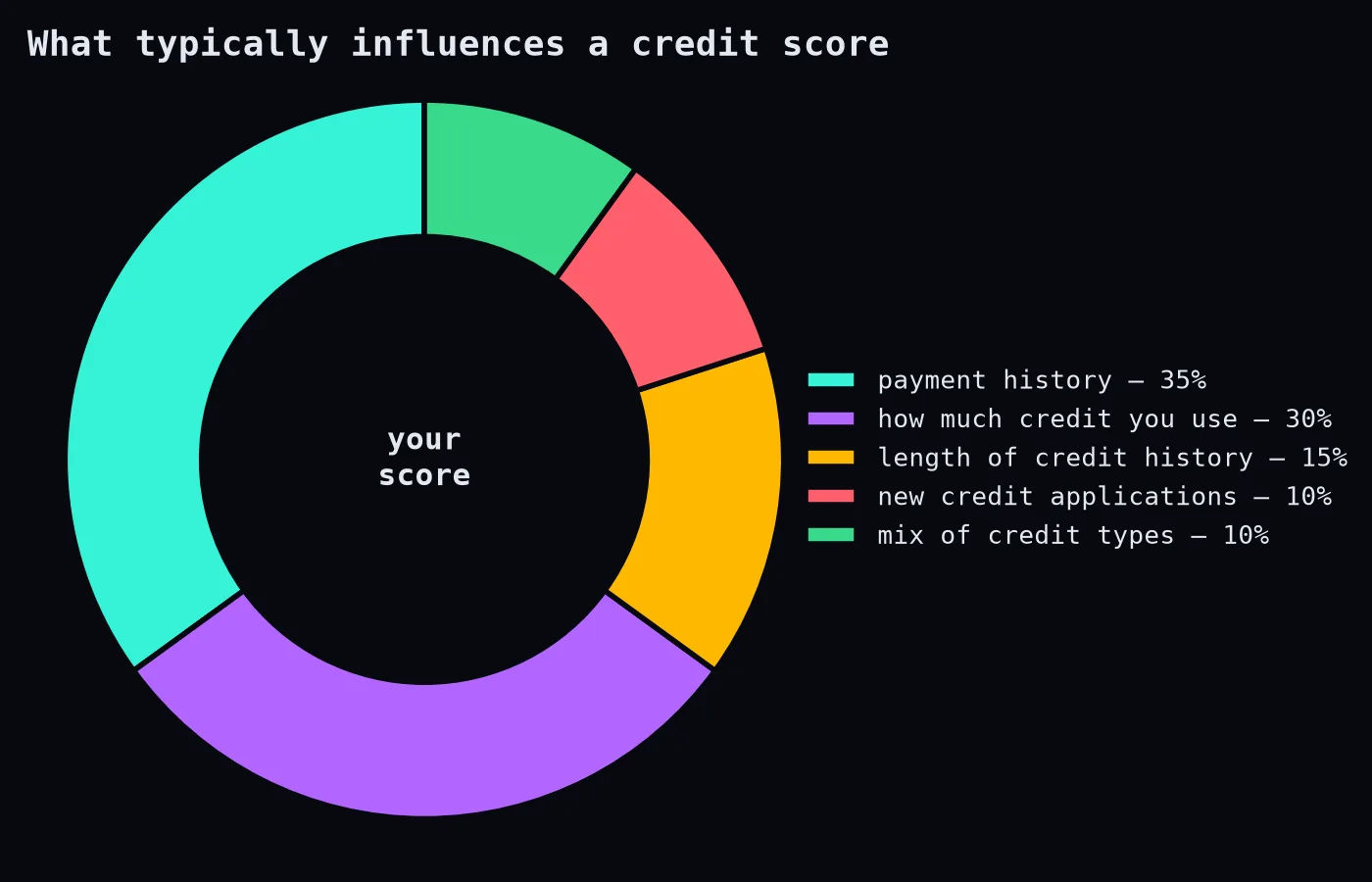
- Payment history: do you pay on time? The biggest factor.
- Credit utilisation: how much of your available credit you use. Using $900 of a $1,000 limit looks riskier than using $200.
- Length of history: older accounts help.
- New applications: many applications in a short time can lower your score.
- Credit mix: a combination of credit cards and loans can help a little.
Building it from zero
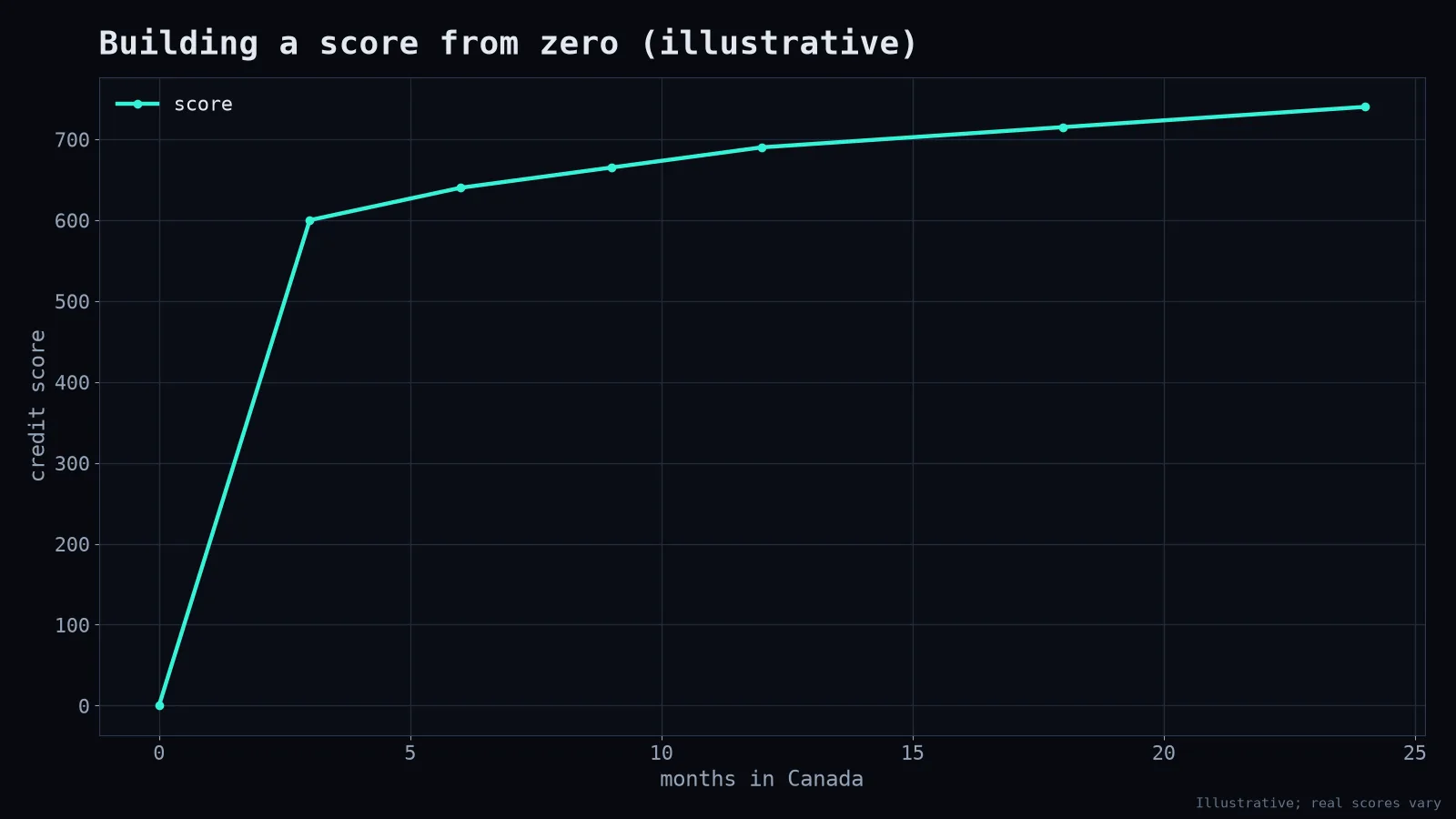
- Get a credit card early. Many banks have newcomer programmes. If you can't get a regular card, a secured credit card (backed by a deposit) is a common starting point.
- Use it lightly and pay it in full every month. Put a small regular bill on it, like your phone, and set up automatic full payment. You build history without paying interest.
- Keep utilisation low, ideally well below 30% of your limit.
- Never miss a payment. Even one late payment can hurt for a long time.
- Don't apply for lots of cards at once.
- Keep your first card open even after you get better ones, so your history grows longer.
- Check your report for free through the bureaus or many banking apps, and dispute errors.
Newcomer gotchas
- Your credit history from your home country usually doesn't transfer.
- "Buy now, pay later" and store financing can affect your credit if not paid properly.
- Some landlords ask for a credit check; if you have none yet, offering a larger deposit (where legal), references or proof of employment can help.
- Beware of anyone offering to "fix" or "build" your credit quickly for a fee.
The cultural shift
In many places, including Bangladesh, borrowing is often seen as something to avoid if possible, and paying cash is a point of pride. In Canada, responsibly using credit is how you prove you're trustworthy for bigger things like a mortgage. It feels backwards at first: you borrow small amounts so that you'll be allowed to borrow big amounts later. But once you understand the system, it's just another report card, and this one rewards boring, consistent habits.