Surviving My First Newfoundland Winter
I was born and raised in the UK, where "winter" means grey skies, a little frost, and a national emergency if two centimetres of snow land on a Tuesday. Then I moved to St. John's, Newfoundland, where the wind has opinions and the snow has ambitions.
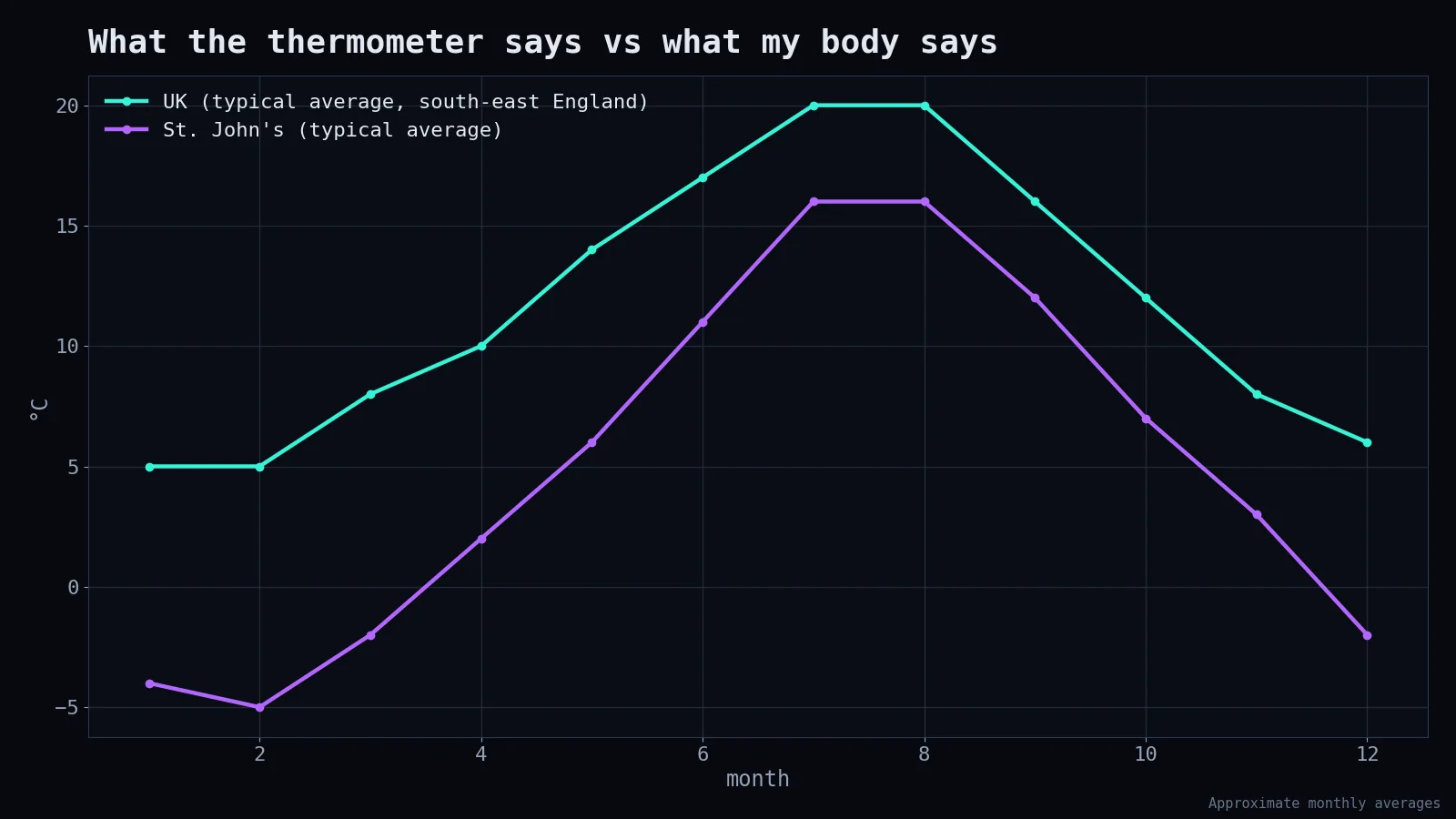
Lesson 1: Temperature is a lie; wind chill is the truth
The forecast says −5°C. You think: manageable. Then the wind arrives from the Atlantic and the "feels like" temperature is −18°C. Newfoundland weather isn't just cold; it's cold with momentum. My first winter coat was stylish, and I mean that as a criticism.
Lesson 2: Cotton is your enemy
I arrived with jeans and cotton hoodies. A local looked at me with the kindness people usually reserve for lost tourists and explained layering.

Wool or synthetic base layers, a warm middle layer and a wind- and waterproof shell. Cotton gets wet and stays wet, which in freezing temperatures is not a fashion problem but a safety one.
Lesson 3: Freezing rain is a special kind of evil
Snow is beautiful. Freezing rain is rain that becomes ice the moment it touches anything: roads, cars, trees, your eyelashes. The whole city becomes a skating rink with traffic. Boots with good grip, or ice cleats that strap onto shoes, are not optional. I learned this by performing an involuntary interpretive dance on a sidewalk in front of a bus stop full of people.
Lesson 4: Locals are made of different material
Newfoundlanders will stand at a bus stop in a blizzard and say "not too bad today, b'y." They'll shovel their driveway, then yours, and refuse a cup of tea in return. The friendliness is real and it's one of the best things about living here. When your car is stuck in a snowbank, strangers appear with shovels, as if summoned.
Lesson 5: Snow days are a whole culture
When a big storm hits, the city can declare a "state of emergency" that closes roads to non-essential traffic. People stock up on bread and milk beforehand. During the storm, everyone's home, the wind howls, and afterwards the whole neighbourhood comes out to dig. It's oddly communal.
Lesson 6: Darkness is the real challenge
In mid-winter, daylight is short. Grey days can stretch on. Many people, including me, find this harder than the cold. What helps: going outside in daylight whenever possible, a daylight lamp, regular exercise, keeping a social routine and talking about it rather than pretending everything's fine. If low mood becomes persistent, see a doctor; seasonal depression is common and treatable.
Lesson 7: Winter driving is a different skill
Winter tyres, an ice scraper, a shovel in the car, slower speeds and much longer braking distances. Watch locals and do what they do, but slower.
The surprising ending
By my second winter, I'd started to enjoy it: crunchy snow under boots, clear blue days after a storm, hot tea after shovelling, the strange quiet of a city under fresh snow. I still check the wind before the temperature, and I still own more gloves than I can explain. But when friends back in the UK ask how I survive, I tell them the truth: good boots, good layers and very good neighbours.