Mentors, Sponsors and the People Who Open Doors
Early in my career, I thought getting ahead was about doing good work and waiting to be noticed. Good work matters enormously. But I learned, slowly, that careers also move through people: someone who explained the unwritten rules, someone who recommended me for something I didn't know existed, someone who said "you should apply, I'll vouch for you."
Mentors vs sponsors
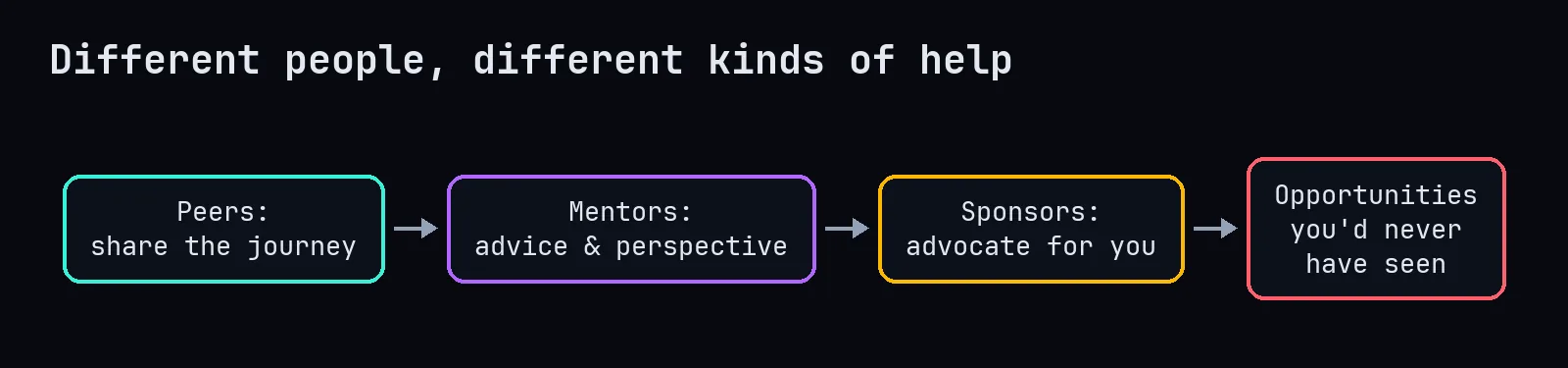
A mentor talks with you. They give advice, share experience, help you think through decisions and occasionally tell you hard truths.
A sponsor talks about you. They put your name forward for projects, promotions, speaking slots and jobs. They use their reputation on your behalf, in rooms you're not in.
Many people have mentors and few have sponsors, and research and experience suggest sponsorship is often what moves careers forward, especially for people from groups that are underrepresented in their field.
How to find mentors (without the awkward email)
"Will you be my mentor?" is a big, vague request. Most good mentoring relationships start small:
- Ask a specific question. "I'm deciding between a data engineering and an ML role; could I get 20 minutes of your perspective?"
- Follow up with what you did. "I took your advice and talked to both teams. Here's what happened." This is the step most people skip, and it's what turns one conversation into a relationship.
- Have several mentors for different things: technical skills, navigating the organisation, career direction, life as an immigrant in a new country.
- Look sideways and slightly ahead. Someone two years ahead of you often gives more practical advice than someone twenty years ahead.
How sponsors happen
You can't usually ask someone to be your sponsor directly. Sponsorship is earned through:
- Visible, reliable work. People sponsor those they trust to make them look good.
- Making your goals known. If nobody knows you want to lead projects, nobody will suggest you.
- Working with senior people on real problems, even small ones.
- Being easy to recommend. Clear communication, follow-through and good relationships with colleagues.
It helps to tell your manager plainly: "I'd like to work toward a senior role in the next year. What would you need to see, and are there opportunities where I could show it?"
Be one, too
You don't need to be senior to help someone. Answer questions from people newer than you, share what you learned from mistakes, and when you're in a room where opportunities are discussed, say the names of people who deserve them. Mention who did the work. Recommend the quiet person who always delivers.
For immigrants and newcomers
Professional networks are often invisible when you arrive in a new country. Alumni groups, professional associations, community organisations, meetups and university networks can help. People are often more willing to help than you expect, especially if you're specific and respectful of their time.
The quiet truth
Talent is everywhere. Opportunity is not. The people who open doors for us are one of the biggest reasons some careers accelerate while others stall. Seek them, thank them, and then go and open doors for someone else.