Job Hunting in Layoff Season

Layoffs happen in waves, and when a big wave hits, the job market fills up with talented, experienced people all applying for the same roles. If you're searching during one of these periods, it can feel personal. It isn't. It's a crowded market, and crowded markets need a different strategy.
Don't play the volume game alone
Sending 300 identical applications feels productive. It's often the least effective use of your time.
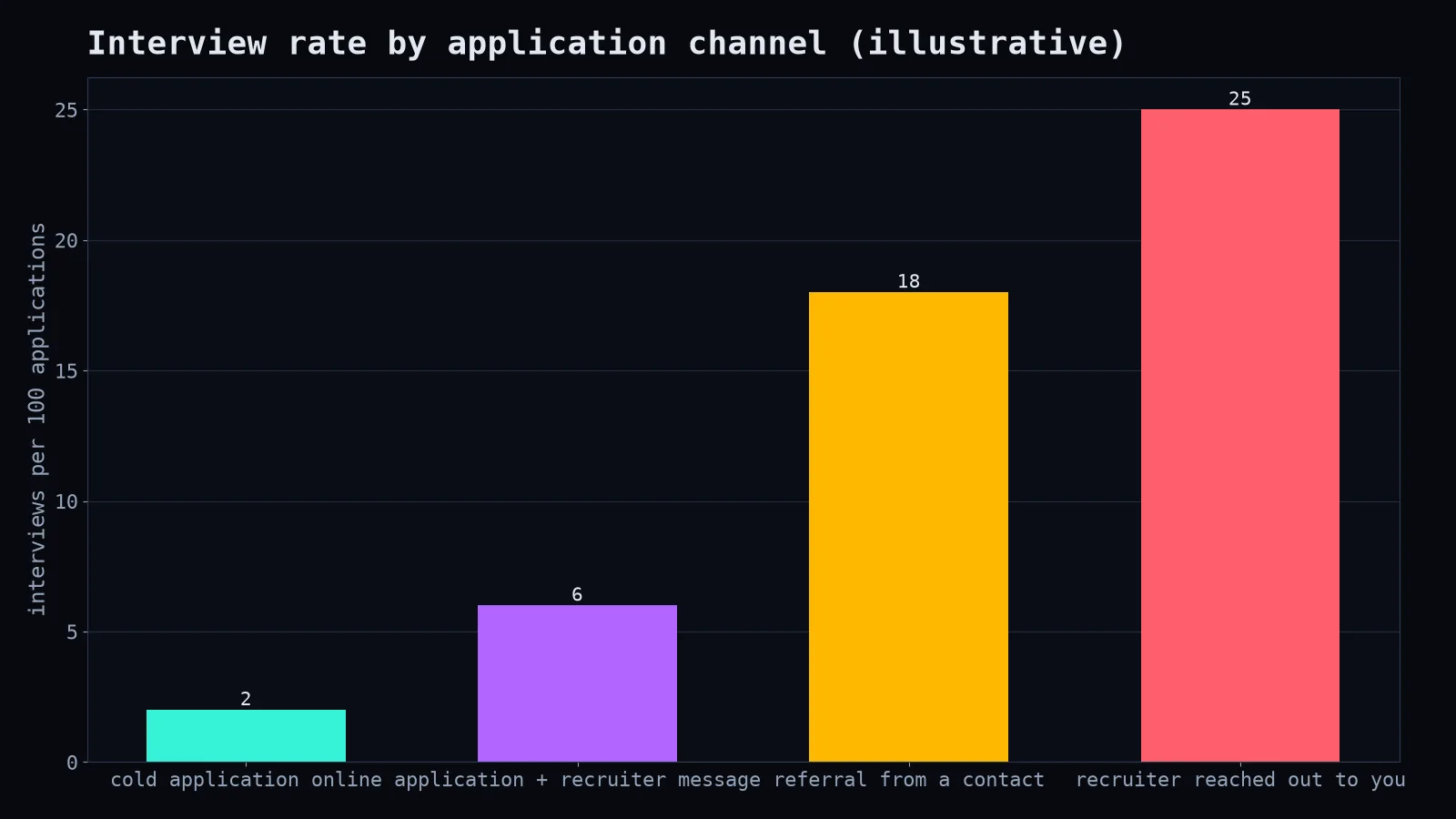
When hundreds of people apply to one posting, a referral or a direct conversation with someone on the team can move you from the pile to the shortlist.
Use the network you forgot you had
You probably know more people than you think: former colleagues, classmates, people from conferences, your manager's old manager, alumni of your university. Most people are willing to help if you make it easy:
"Hi Priya, I saw [Company] is hiring a data analyst. I was impacted by the layoffs at [Company] and I'm looking for my next role. Would you be open to a 15-minute chat about the team, or to referring me if it seems like a fit? Here's my resume, and here's the posting."
Specific, short, with everything attached. Don't ask "do you know of any jobs?" Ask for one concrete thing.
Make your work visible
- Update your resume and LinkedIn with results, not duties.
- Put a small portfolio online: a GitHub project, a case study, a dashboard, a blog post explaining something you built.
- If you were laid off, say so plainly. "My role was eliminated in a company-wide reduction" is neutral and common. No need to hide it or over-explain.
Plan your week like a job
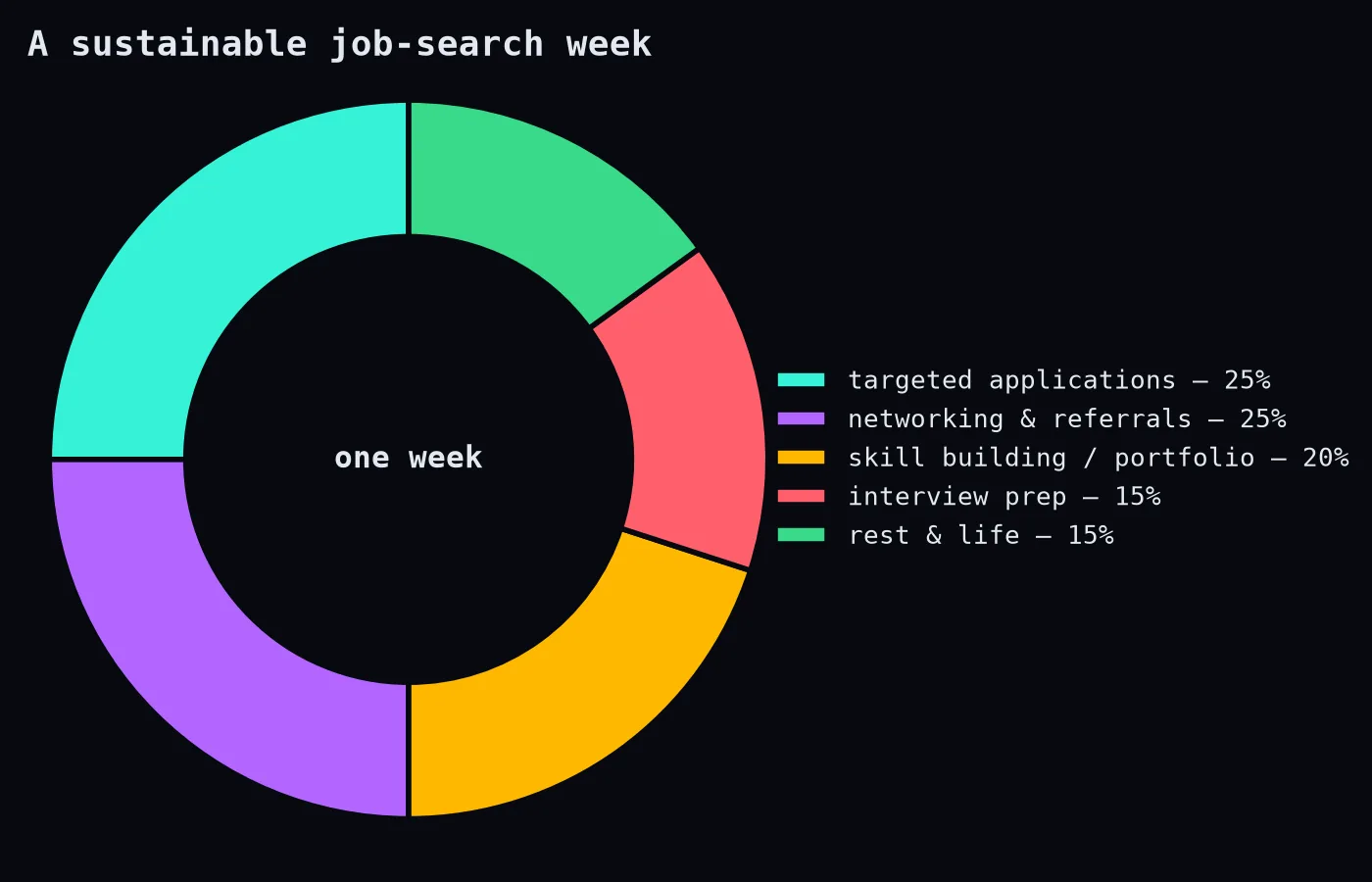
Structure helps against the drifting, anxious days. Block time for applications, networking, learning and interview practice. Track everything in a spreadsheet: company, contact, date, status, next step.
Keep your skills moving
A layoff gap is a chance to learn the thing you never had time for, whether that's cloud certification, a new framework or finally understanding statistics properly. It also gives you something positive to talk about in interviews: "During the search, I built X to learn Y."
Look after your head
Rejections and silence are draining. Some things help:
- Separate your worth from the market's mood.
- Keep routines: sleep, exercise, meals, time outdoors.
- Talk to other job seekers; it helps to know it's slow for everyone.
- Take real days off from searching.
- If anxiety or low mood becomes heavy, talk to a professional. Many employers' severance packages include employee assistance programmes.
Practical money steps
Check your severance terms, health coverage and eligibility for employment insurance or unemployment benefits as soon as possible. Rework your budget early, not when savings run low.
The long view
Many people I know who were laid off ended up, a year later, in roles they liked more: better teams, better pay, or a direction they'd never have tried otherwise. It doesn't feel like that during the search. But markets turn, companies hire again, and good people get found, especially the ones who made it easy for others to find them.