Imposter Syndrome: Everyone Is Googling Things
Here's a secret from inside the industry: the people who seem to know everything are mostly very good at searching for things quickly. I've watched brilliant engineers look up basic syntax, re-read documentation for functions they've used a hundred times, and type "difference between merge and rebase" into a search bar with the solemnity of someone praying.
If you feel like a fraud who will be "found out" any day now, welcome. The club is huge, and the meetings are just everyone quietly Googling.
What imposter syndrome is
It's the persistent feeling that your success is due to luck, timing or other people's mistakes, not your ability, and that you'll be exposed. It's common among high achievers, people early in their careers, people who changed fields and people who are "the only one" of something in the room: the only woman, the only immigrant, the only person without a computer science degree.
Why it happens in tech especially
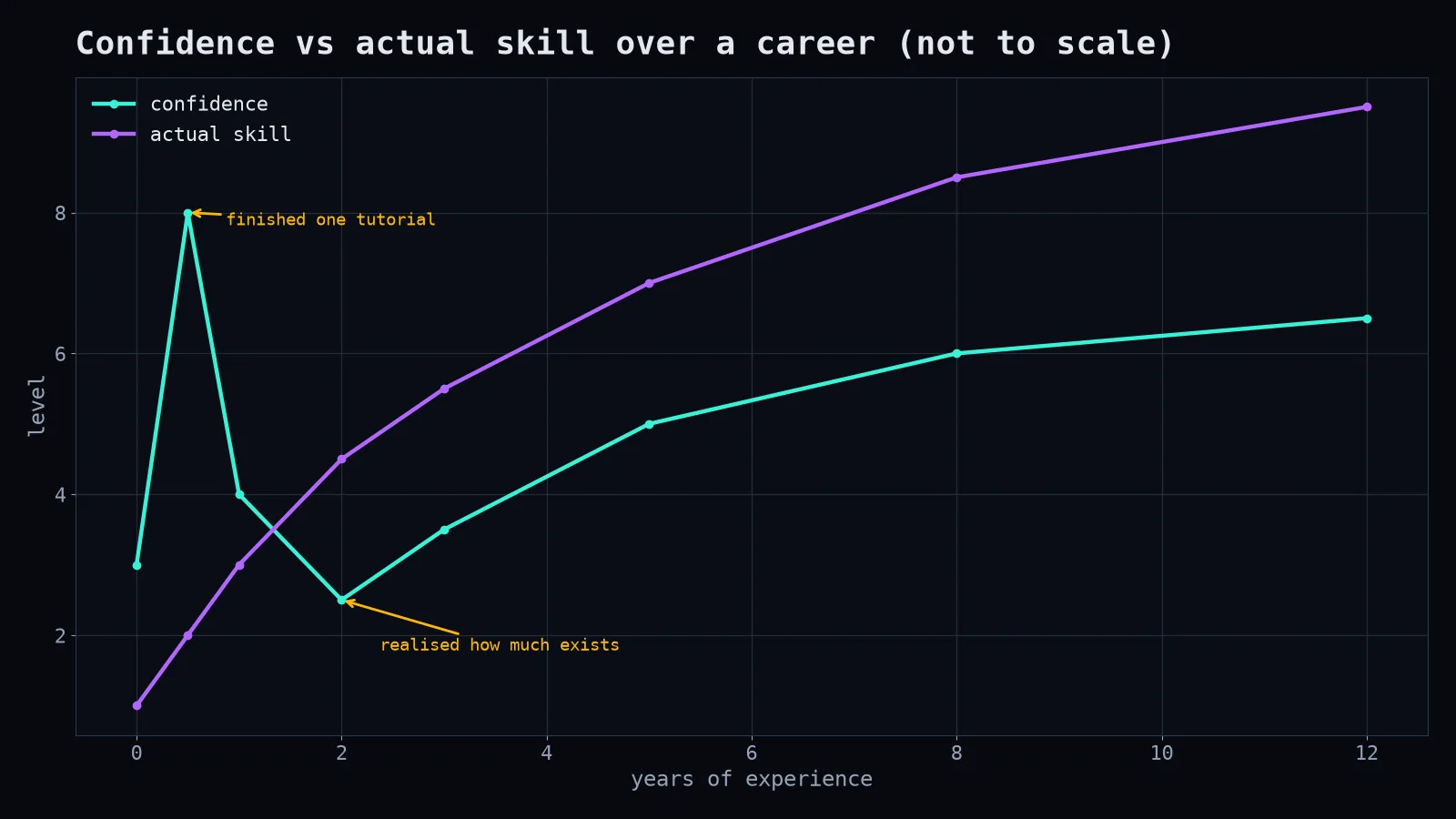
- The field is enormous. No one knows all of it. Seeing the size of what you don't know feels like failing.
- Everything changes constantly. Your knowledge has an expiry date, and so does everyone else's.
- Public highlight reels. You see others' polished launches and conference talks, and your own messy drafts.
- Code review. A ritual where your work is critiqued in writing, permanently. Even kind feedback can feel personal.
Things that actually help
Keep a "wins" file. A plain document where you write down things you shipped, problems you solved, kind messages from colleagues. When your brain says "you've done nothing," you have evidence.
Separate "I don't know this yet" from "I'm not good enough." Not knowing is the normal state of doing new things. Learning quickly is the skill, not knowing already.
Ask questions early. The fear of looking stupid makes people stay stuck for days on something a colleague could answer in two minutes. Asking is a sign of competence, not the opposite. Senior people ask lots of questions; that's partly how they got senior.
Talk about it. Mention the feeling to a mentor or a trusted colleague. You'll often hear "me too," which is surprisingly powerful.
Compare yourself to past you, not to the most visible person on the internet.
Teach something. Explaining a concept to someone newer shows you how much you've actually learned.
When it's not just a feeling
Sometimes the problem isn't in your head. If you're consistently excluded, talked over or given less credit than others, that's a workplace problem, not a confidence problem. Name it, document it and seek support. Imposter syndrome advice shouldn't be used to tell people to "just be more confident" about real unfairness.
The reframe I use
Feeling like an imposter often means you're at the edge of your comfort zone, which is where growth happens. People who never feel it may simply never stretch. So the feeling isn't proof you don't belong. It's often proof you're learning.
And if you ever catch me searching "how to undo last git commit," no, you didn't.