Tech Regulation: Why Governments Move Slow and Break Nothing
Silicon Valley's old motto was "move fast and break things." Governments' unofficial motto might be "move slowly and break nothing, eventually." The result is a permanent gap between what technology can do and what rules exist for it.
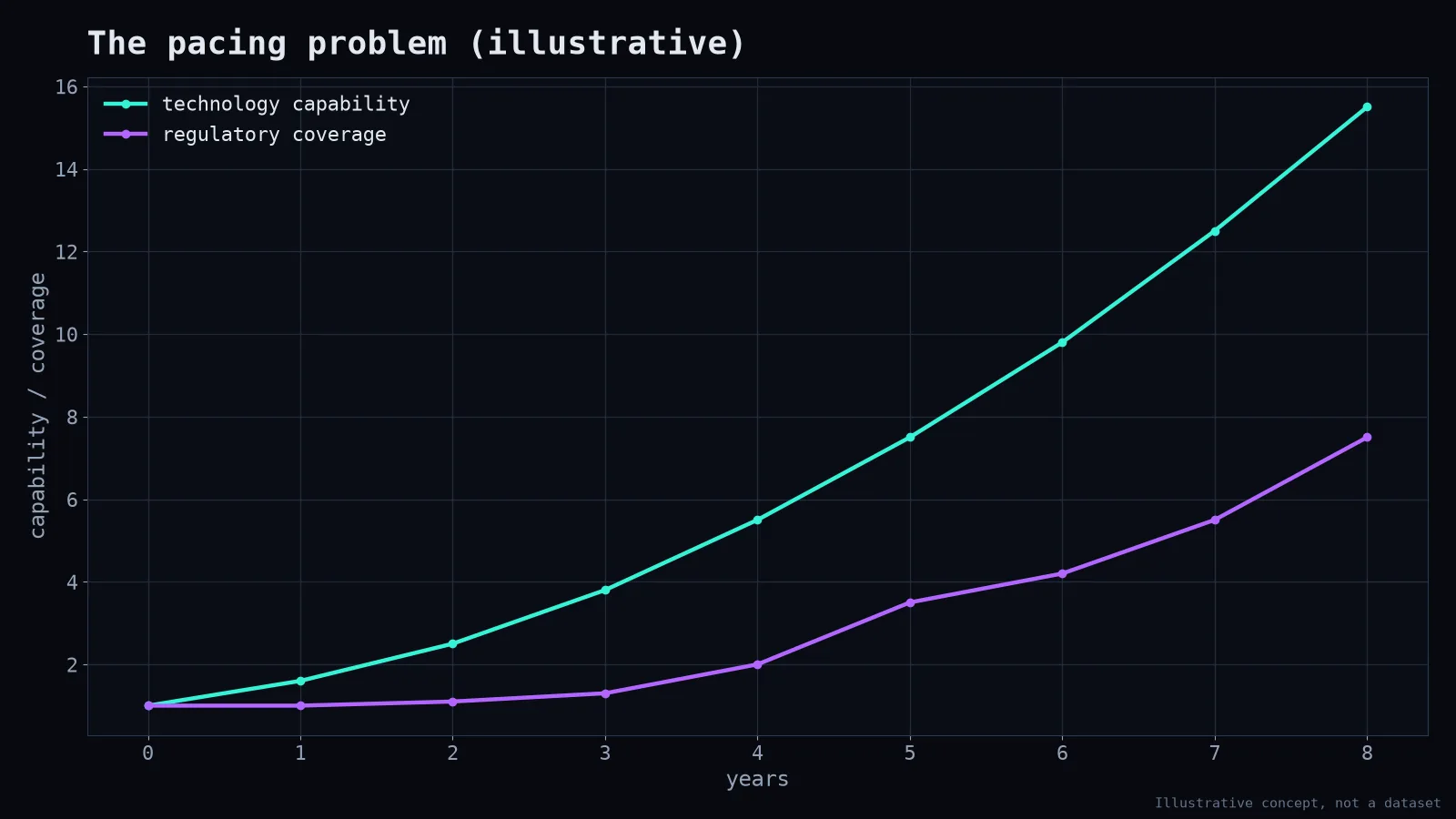
Why regulation lags
- Laws are supposed to be slow. Consultation, debate, committee review and legal drafting exist to avoid hasty mistakes. That's a feature in a democracy, even when it's frustrating.
- Lawmakers aren't technologists. Many legislators must regulate things they've never used, guided by experts and lobbyists with competing interests.
- Technology changes faster than definitions. By the time a law defines a technology, the technology has moved on.
- Global products, national laws. An app built in one country is used everywhere, while laws stop at borders.
What good tech regulation tends to look like
Focus on outcomes and risks, not specific technologies. Rules about "unfair discrimination in hiring decisions" age better than rules about one particular algorithm. The European Union's AI Act, for example, takes a risk-based approach, with stricter obligations for high-risk uses like hiring, credit and critical infrastructure than for low-risk ones.
Proportionality. Obligations should match the risk and the size of the organisation. Rules written for giant platforms can crush small startups if applied identically.
Transparency and accountability. Requirements to explain, document, audit and allow appeals can be more durable than technical mandates.
Enforcement that actually happens. A law without enforcement is a suggestion.
Room to update. Some regulations include review periods or delegate technical details to regulators who can update guidance faster than parliaments can amend laws.
The privacy precedent
Data protection laws like Europe's GDPR were criticised as burdensome and confusing, and some criticism was fair: cookie banners became a cultural phenomenon of collective annoyance. But they also changed defaults: companies now think harder about what data they collect, and many other countries have adopted similar laws. Regulation can shape industry norms even beyond its jurisdiction.
What it means for people who build things
If you build software, regulation isn't just a legal team problem anymore:
- Document data sources and model behaviour. Many emerging rules require it, and it's good engineering anyway.
- Design for appeal and human review in high-stakes decisions.
- Collect less data. The easiest data to protect is data you never collected.
- Know which rules apply where your users are, not just where you are.
My opinion
Both extremes are wrong. "Regulation kills innovation" ignores that markets need trust to function; people won't use products they can't trust. "Regulate everything now" ignores that bad rules entrench big companies who can afford compliance. The productive middle is boring: clear rules for real risks, flexibility elsewhere, and honest conversation between people who build technology and people who govern it.
Governments may move slowly. But "break nothing" is sometimes a fair trade, as long as it doesn't become "do nothing."