The Layoff-and-Hire-AI-Engineers Cycle
It's become a familiar headline pair. Monday: "Tech company lays off 8% of staff to improve efficiency." Thursday: "Same tech company is hiring aggressively for AI talent." For the people laid off on Monday, Thursday's news feels like a slap.
What's actually happening
Several things at once:
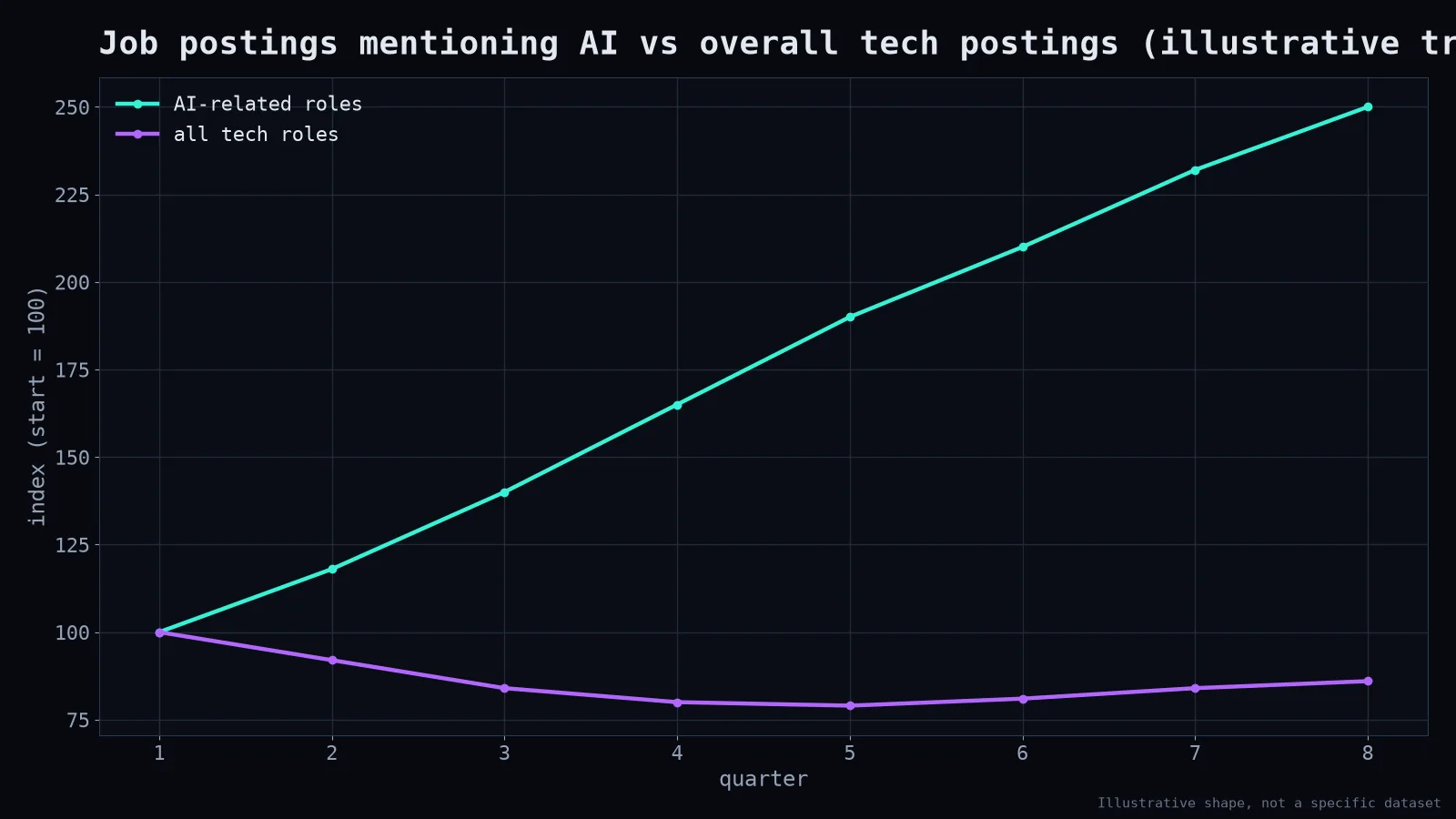
- Reallocation, not just cuts. Companies are moving budget from older products and roles toward AI projects. Headcount in one area falls while it rises in another.
- Correction after over-hiring. Many tech companies hired very fast in boom years. Some of the cuts are a delayed correction, now often explained in AI terms because that's the story investors want to hear.
- Efficiency pressure. When interest rates rose, cheap money disappeared, and investors started rewarding profits over growth.
- Genuine automation. Some tasks, especially routine support, content and parts of software development, can now be done with fewer people. This is real, but it's often overstated in announcements.
The uncomfortable part
"We replaced them with AI" is sometimes true, sometimes partly true and sometimes a convenient narrative. It sounds more forward-looking than "we hired too many people in 2021." It's worth reading announcements with that in mind.
Who gets squeezed
- Entry-level roles, because the routine tasks juniors used to learn on are the easiest to automate. That's a long-term problem: today's juniors are tomorrow's seniors.
- Generalists in shrinking product areas, whose skills are solid but not in the current spotlight.
- People without visibility or sponsorship, who often go first in any reorganisation.
Who benefits
Not only "AI researchers." There's demand for people who can apply AI to real problems: data engineers who build reliable pipelines, software engineers who integrate models into products, domain experts who can evaluate whether outputs are correct, and people who can measure and govern these systems.
What I'd do if I were caught in the cycle
- Reframe existing skills. A support specialist who understands customers can help evaluate AI support tools. A QA engineer can evaluate model behaviour. Domain knowledge plus AI literacy is a strong combination.
- Build a small, real AI project in your field: automate something boring, measure whether it helped, and write it up honestly.
- Learn the fundamentals, not just the tools. Tools change every quarter; understanding data, evaluation and failure modes lasts.
- Use your network. Many AI roles are filled by referral because companies are flooded with applications.
For companies
If you're cutting one team while hiring for AI, consider whether some of the people you're letting go could be retrained. They already understand your customers, systems and culture, which takes new hires months to learn. Treating people as interchangeable inputs is how you end up with very modern technology run by people who don't understand the business.
The cycle will probably continue for a while. The best protection, for individuals and companies alike, is the same: keep learning, stay close to real problems and be suspicious of any story that's suspiciously convenient.