Social Media Algorithms Know You Better Than Your Mother
My mother knows I like biryani, cricket and complaining about winter. My video feed knows that, plus the specific type of woodworking video I watch at 1 AM, the exact second I lose interest in a cooking clip, and that I've rewatched one cat falling off a sofa four times. It has never met me. It still knows me disturbingly well.
How feeds learn
Modern feeds are recommendation systems: machine learning models that predict what you're likely to engage with next. They learn from signals, and most of the important signals aren't the ones you consciously give.
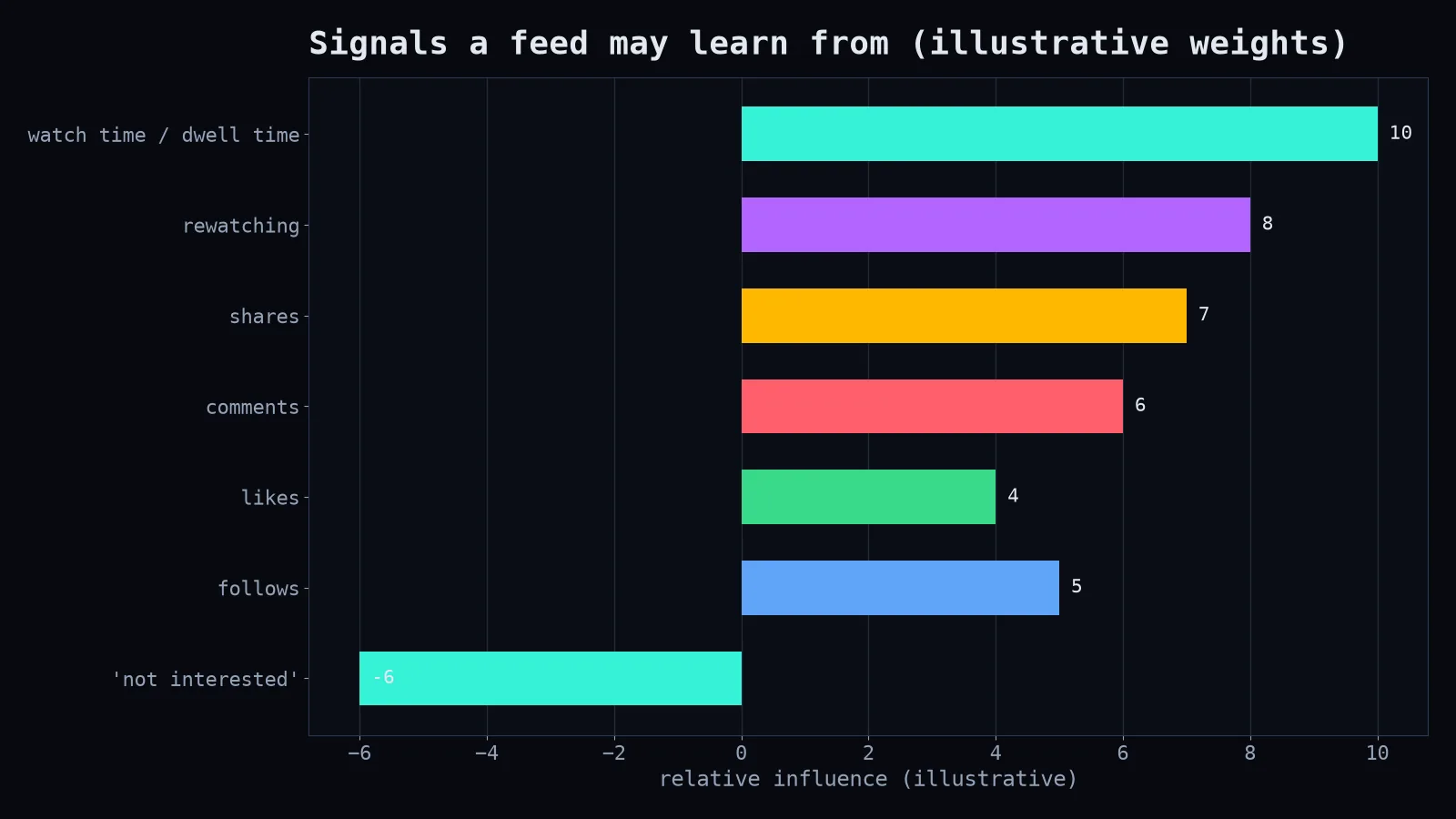
- How long you watch or look at something, even if you never tap anything
- Rewatches, pauses and scrolling speed
- Shares and comments, especially ones that start conversations
- Who you follow and what similar people engage with
- Negative signals, like "not interested" or quickly scrolling past
You may think you like serious documentaries. Your watch time may say you like 40-second clips of people restoring rusty knives. The algorithm believes your behaviour, not your opinion of yourself.
The feedback loop
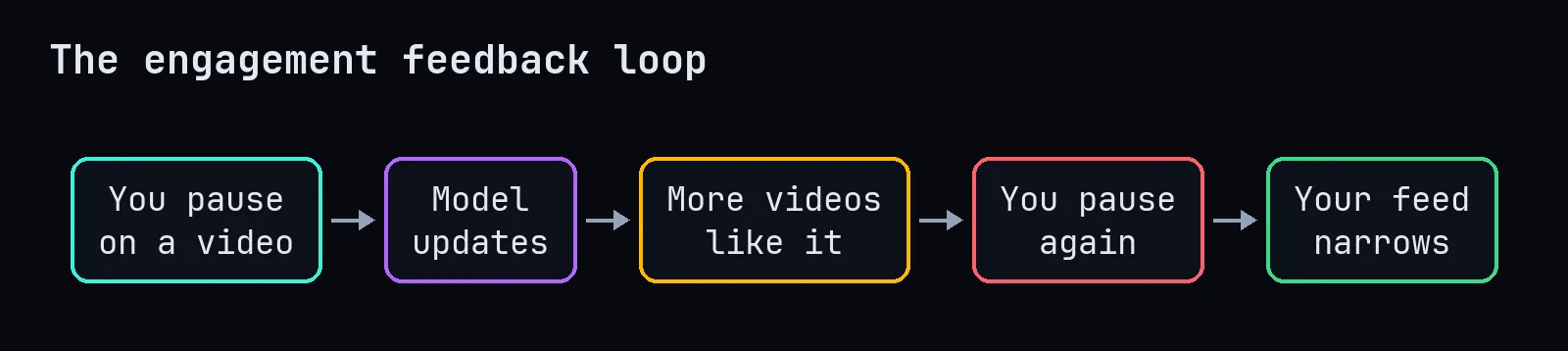
Every pause teaches the model; the model shows more of the same; you pause again. Over time, a feed can narrow toward whatever reliably holds your attention. That might be harmless (more cats) or not (more outrage, more anxiety, more extreme content in some cases).
Engagement isn't the same as wellbeing
Platforms optimise for metrics like time spent and interactions, because that's what supports advertising revenue. Content that provokes strong emotions, especially anger and outrage, often drives engagement. Platforms have adjusted their systems over the years, sometimes significantly, in response to criticism and regulation. But the basic tension remains: what keeps you scrolling isn't always what's good for you.
Taking some control back
- Use the negative signals. Tap "not interested," mute words, unfollow accounts that make you feel worse. The algorithm listens.
- Search intentionally for what you want to see more of, and engage with it. You're training your own feed.
- Use chronological or "following" feeds where available, which show what people you chose posted rather than what's predicted to engage you.
- Notice the late-night spiral. Feeds are especially good at holding attention when you're tired. Screen-time limits and app timers help.
- Turn off non-essential notifications. Notifications are invitations back into the loop.
- Clear or pause watch history occasionally to reset recommendations.
The data scientist's perspective
Recommendation systems are genuinely impressive, and useful: they help people discover music, creators and ideas they'd never find otherwise. The problem isn't that algorithms learn from behaviour. It's what they're asked to optimise. A system optimising for "time spent" will get very good at keeping you. A system optimising for "satisfaction a week later" would behave differently, and some platforms are experimenting with measures like that.
Until then, remember who's training whom. Every scroll is a vote. Vote for the feed you actually want, and, occasionally, call your mother instead. She'll be happier than the algorithm.