Financial Advice from a Data Scientist (Not Financial Advice)
I'm not a financial advisor. I'm a data scientist. But I've noticed that the habits that make data analysis work also make personal finance less chaotic. So here's money advice, filtered through the lens of someone who spends all day looking at messy data. Treat it as ideas, not instructions.
1. Measure before you optimise
You can't improve what you haven't measured. Before budgeting, track every expense for one month. Don't judge, just record. Many banks categorise spending automatically; a spreadsheet works too.
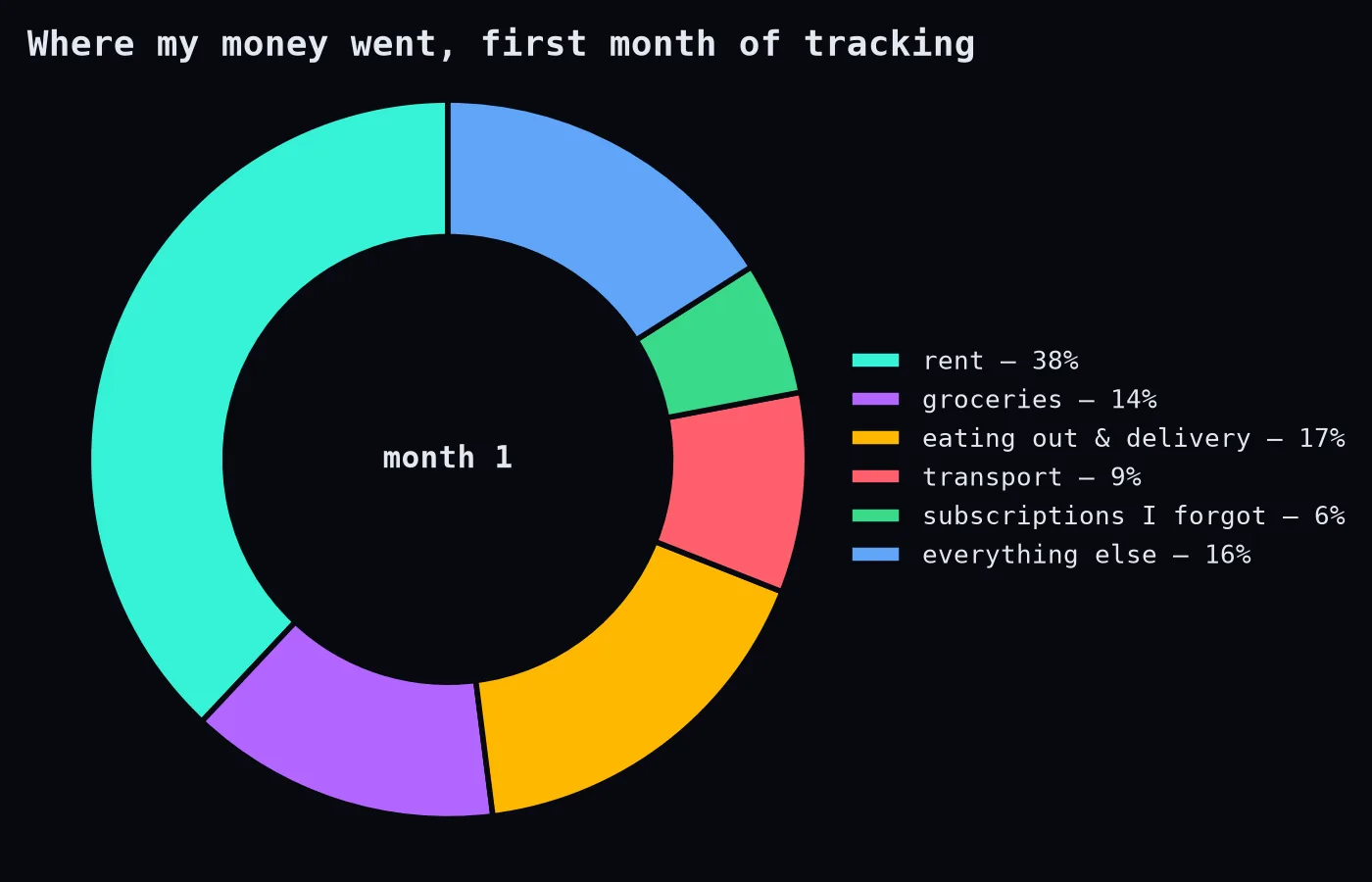
Almost everyone finds a surprise. Mine was food delivery, which turned out to be a substantial line item rather than "occasional treats." Data doesn't lie, but it does embarrass.
2. Look at the distribution, not just the average
"I spend about $400 a month on groceries" hides the month you spent $750 because of guests, a festival and a cupboard reset. Plan for variability. An emergency fund is basically a buffer for the tail of the distribution: car repairs, job loss, medical costs, a laptop that dies the week before a deadline.
3. Beware of survivorship bias
You hear about the friend whose stock went up 10x. You don't hear about the ten friends whose picks quietly went to zero, because nobody posts about that. Success stories are a biased sample. The same applies to "I dropped out and became a millionaire" headlines.
4. Diversify, because you can't predict the future
In machine learning, ensembles of models usually beat a single model because they reduce variance. In investing, diversification does something similar: spreading money across many companies, sectors and countries reduces the chance that one bad outcome destroys everything. Concentrating on one stock is like trusting a single model trained on 12 rows of data.
5. Minimise fees like you'd minimise latency
Small percentages compound over decades. An investment fund with a high annual fee needs to outperform a low-cost index fund by that fee every year just to break even, and most don't, consistently. Check the fees on everything: funds, accounts, transfers, and especially sending money internationally, where hidden exchange-rate markups are common.
6. Automate the boring parts
The best data pipelines run without humans. Your savings should too:
- automatic transfer to savings or investments on payday
- automatic bill payments to avoid late fees
- a calendar reminder once a quarter to review subscriptions
Payday → 10-20% to investments (automatic)
       → emergency fund until it covers 3-6 months (automatic)
       → bills (automatic)
       → the rest is guilt-free spending
Pay yourself first, then spend what's left, rather than saving what's left after spending.
7. Don't overfit to recent data
After markets rise for a while, people assume they'll keep rising. After a crash, people assume they'll keep falling. Both are overfitting to the last few data points. Long-term plans should be based on long-term data and your own timeline, not last month's headlines.
8. Remember the objective function
What are you optimising for? Maximum wealth at 65? Freedom to change careers? Supporting family abroad? Security? Different objectives lead to different "optimal" choices. Define yours before copying someone else's strategy.
The disclaimer, sincerely
Everyone's situation is different: country, taxes, income, family, risk tolerance. For big decisions, talk to a qualified, fee-only financial professional. But measuring, thinking in distributions and being sceptical of shiny success stories? That's free, and it works for spreadsheets and bank accounts alike.