AI Trading Bots: Losing Money at the Speed of Light
The advert shows a dashboard with green numbers, a man in sunglasses and the words "AI-powered trading bot: 900% returns." Behind the screenshot, there's a quieter truth every data scientist recognises: that's what overfitting looks like when it's wearing a suit.
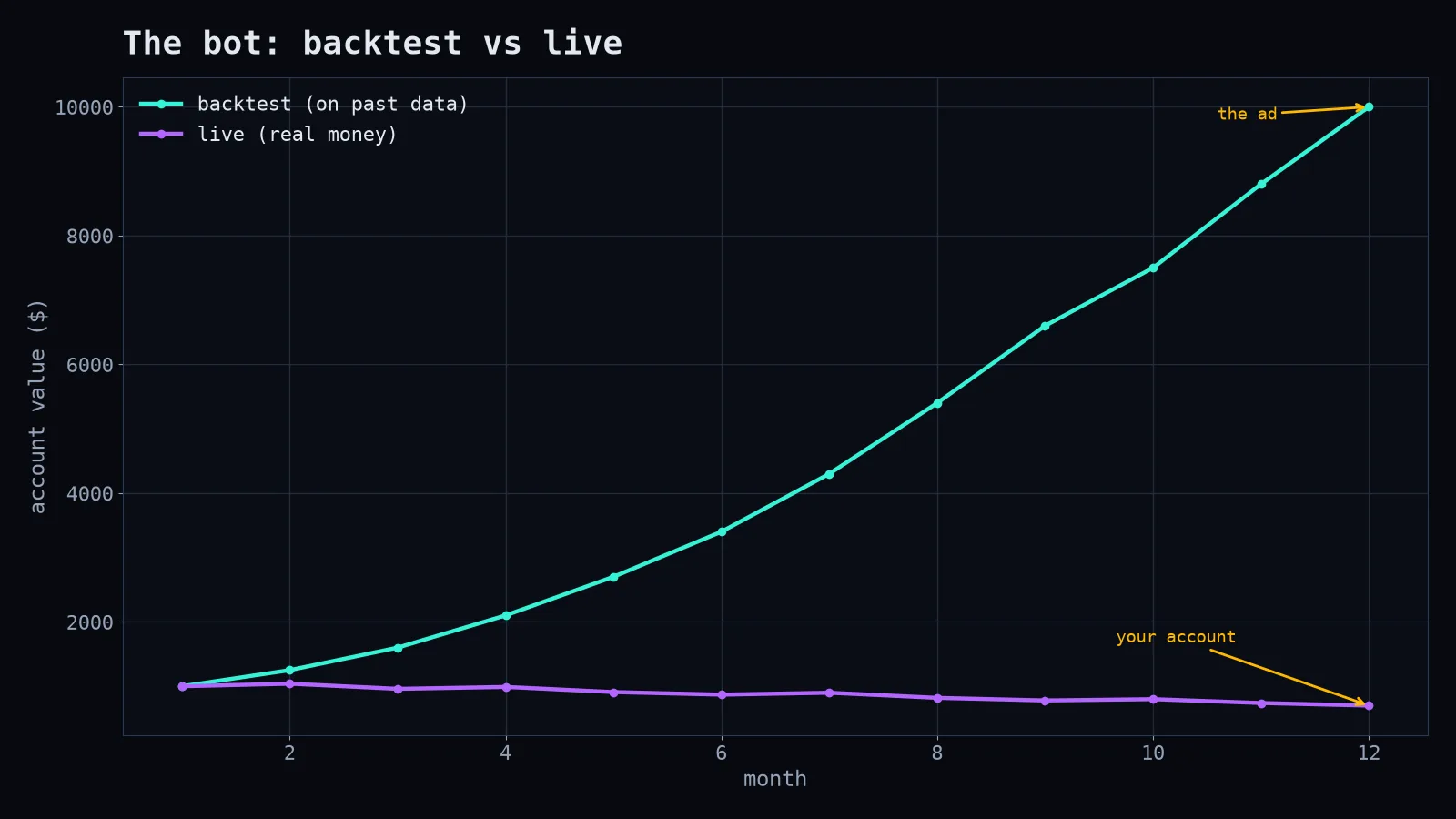
How the 900% happens
A backtest runs a trading strategy on historical prices to see how it would have performed. It's a useful tool. It's also extremely easy to fool yourself with:
- Overfitting. Try thousands of combinations of indicators and thresholds on the same historical data, and some will look spectacular by pure chance. They learned the noise of the past, not a pattern that repeats.
- Look-ahead bias. Accidentally using information that wasn't available at the time, like the day's closing price to make a decision in the morning.
- Ignoring costs. Trading fees, spreads and slippage (the difference between the price you wanted and the price you got) are small per trade and huge for bots that trade constantly.
- Survivorship bias. Testing only on companies that still exist today quietly removes all the ones that went bankrupt.
"But it uses AI"
Machine learning can find patterns in market data. So can every large, well-funded professional trading firm, with better data, faster connections, more researchers and lower costs. Markets are competitive: when a simple, profitable pattern exists, others tend to find it and trade it away.
Ask the obvious question: if a bot reliably made money, why would its creator sell it to you for $299 instead of running it with their own (or borrowed) millions?
What's usually actually being sold
- A subscription. The revenue is your monthly fee, regardless of whether the bot wins.
- Leverage. Some platforms encourage borrowing to trade, which magnifies losses as well as gains.
- "Managed accounts" where you deposit money on an unfamiliar platform. Some of these are outright scams with fake dashboards showing fake profits, until you try to withdraw.
How a data scientist would evaluate a strategy
- Split history into training and a completely untouched test period.
- Include realistic fees and slippage.
- Compare with simply buying and holding an index fund over the same period.
- Run it with paper money in real time for months.
- Be deeply suspicious of anything that looks too smooth.
Most strategies don't survive step 3. That's not pessimism; it's how competitive markets work.
The punchline
AI trading bots do one thing at incredible speed: execute decisions. If the decisions are bad, they execute bad decisions at incredible speed. The fastest way to lose money used to be a casino. Now it fits in an app with dark mode.
Not financial advice. If you want to learn about markets, start with a small amount, understand the costs and keep most of your money in boring, diversified investments.